Quotessence
Home / Quotes / Quote by Charles Caleb Colton

Quote by Charles Caleb Colton

“Literature has her quacks no less than medicine, and they are divided into two classes; those who have erudition without genius, and those who have volubility without depth; we shall get second-hand sense from the one, and original nonsense from the other.”

Quote by Charles Caleb Colton

Work

Lacon: or, Many things in few words

This book delves into the philosophical underpinnings of concise communication, examining the value of brevity and its impact on thought and language. more

Author
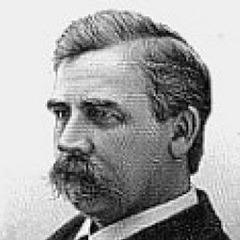
Charles Caleb Colton

Charles Caleb Colton was an English writer active from 1780 to 1832. Known for his humor and wit, he is particularly recognized for his aphorisms and satirical works. more

You May Also Like

“There are circumstances of peculiar difficulty and danger, where a mediocrity of talent is the most fatal quantum that a man can possibly possess. Had Charles the First and Louis the Sixteenth been more wise or more weak, more firm or more yielding, in either case they had both of them saved their heads.”

“As the grand discordant harmony of the celestial bodies may be explained by the simple principles of gravity and impulse, so also in that more wonderful and complicated microcosm, the heart of man, all the phenomena of morals are perhaps resolvable into one single principle, the pursuit of apparent good; for although customs universally vary, yet man in all climates and countries is essentially the same.”

“We injure mysteries, which are matters of faith, by any attempt at explanation in order to make them matters of reason. Could they be explained, they would cease to be mysteries; and it has been well said that a thing is not necessarily against reason because it happens to be above it.”

“If it be true that men of strong imaginations are usually dogmatists--and I am inclined to think it is so--it ought to follow that men of weak imaginations are the reverse; in which case we should have some compensation for stupidity. But it unfortunately happens that no dogmatist is more obstinate or less open to conviction than a fool.”

“If our eloquence be directed above the heads of our hearers, we shall do no execution. By pointing our arguments low, we stand a chance of hitting their hearts as well as their heads. In addressing angels, we could hardly raise our eloquence too high; but we must remember that men are not angels.”