Quotessence
Home / Quotes / Quote by Cassandra Clare

Quote by Cassandra Clare

“Thomas was frowning. “My aunt Tatiana is mad. My father has often said so, that his sister was driven to madness by what happened to her father and her husband. She blames our parents for their deaths.” “But James has never done anything to her,” said Christopher, his eyebrows knitting together. “He’s a Herondale,” said Thomas. “That’s enough.” “That’s ridiculous,” Christopher said. “It is as if one was bitten by a duck and years later one shot a completely different duck and ate it for dinner, and called that revenge.” “Please do not use metaphors, Christopher,” said Matthew. “It gives me the pip.” “This is bad enough without mentioning ducks,” said James. He had never fancied ducks since one had bitten him in Hyde Park as a small child.”

Quote by Cassandra Clare

Work

Chain of Gold

Browse quotes and source details for this work. more

Author
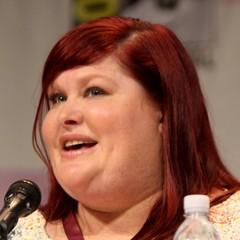
Cassandra Clare
Cassandra Clare

Cassandra Clare is a renowned American author, best known for her young adult fantasy novel series, 'The Mortal Instruments'. Her works blend elements of magic, romance, and adventure, captivating young readers worldwide. more

You May Also Like

“Well, if you must know,” he said, “I delivered an extremely well-considered speech, touching on the topics of the importance of family, the virtue of forgiveness, the need for all Shadowhunters to be allied in the fight against demons, the smallness of the sacrifice being asked of her, the pointlessness of revenge, and, of course, the giving nature of the season.” “Oh?” “Yes,” said Will eagerly. “And then, I counted banknotes totalling two hundred British pounds sterling directly into her hand.” “Will!” said Gideon, shocked. “I told you,” Will said airily. “Everyone likes money. Even mad revenge-seeking sisters, with the dried blood of their husbands on their frocks, like money.”

“What would the world look like if you and I—as the first generations of resource-rich, informed, penicillin-protected, and free mothers to have ever walked the planet—released ourselves from the burden of stories told for us and began to see ourselves for the incredibly powerful, important, worthy, and inherently beautiful beings we really are? I believe the outcome would change the course of history.”

“That fact that motherhood overwhelms us is not a sign of weakness but an indicator of importance. It distinguishes mothering as one of the few endeavors in our lifetime worthy of such an enormous and all-encompassing investment. We are similarly overwhelmed by such things as love, beauty, justice, and the pursuit of a meaningful existence. When we honor the immensity of motherhood as we do other powerful gifts—instead of resisting or trying to tame it—it changes us. Like native trees on a tropical coastline, we have the potential to grow stronger with every storm, thrive when we grow in groups, dance with the wind and waves, and draw our strength from a well deep within.”

“Though self-abandonment is something most people struggle with in some way or another, motherhood is a breeding ground for this insidiously self-destructive behavior. From the time children are born, their needs are intense, relentless, and literally screamed in our faces. Luckily for them (and the human race) we are biologically wired to respond to their needs, even when it means setting aside our own. While our nurturing, self-sacrificial instincts are beautiful and life preserving, they’re also a fast track to burnout, resentment, exhaustion, and destruction, if we’re not careful. It’s natural to minimize our needs in the interest of the beautiful beings we love, but it’s not natural that we’re raising our children in isolation and that the bulk of their needs are falling on one person instead of a tribe of extended family members and friends. This, and other profoundly affecting gaps within our culture, makes self-awareness and self-nurturing that much more essential. Unfortunately for some of us, it isn’t until we’re so emotionally or physically wrecked by our self-abandonment that we realize how disconnected from crucial parts of ourselves we really are.”