Quotessence
Home / Quotes / Quote by David Henry Hwang

Quote by David Henry Hwang

“I now know that to do a worthwhile family history I must interpret the past without falling into either demonizing or unquestioning acceptance. . . . As a playwright, what I object to right now is any form of fundamentalism, whether it's nationalistic, religious or ethnic. . . . I think it is ridiculous - and fundamentalist, by the way - to say that I am not changed by the culture around me.”

Quote by David Henry Hwang

Author
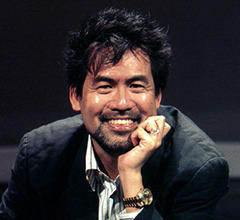
David Henry Hwang
David Henry Hwang

David Henry Hwang is a celebrated playwright known for his exploration of identity and cultural heritage in American theater. Born on August 11, 1957, Hwang has made significant contributions to the American stage with his thought-provoking and culturally rich plays. more

You May Also Like

“On their own, each [character] is a victim of no importance. But when you bring them together, they become a dangerous weapon. Jeanne is the vowel and Sophie the consonant. Psychologists know this phenomenon well. Each individual is harmless, but together they create an explosive chemical reaction. It's like Bonnie and Clyde, like Thelma and Louise.”

“I was not interested in doing the plot of Oedipus in blackface. I did wonder, what would these people have been like if they hadn't been in that situation?... One could look at Oedipus, or at my character Augustus, as a cynical schemer who did everything because he was hungry for power. But that's just too easy. I'm more interested in how humans can embody conflicting goals and emotions.”

“At best, the relationship between drama critic and playwright is a pretty twiggy affair. When I'm asked whom I write for, after the obligatory, I write only for myself, I realize that I have an imaginary circle of peers - writers and respected or savvy theatre folk, some dramatic writers and some not, some living, some long gone. . . . Often a writer is aware as he works that a certain critic is going to hate this one. . . . You don't let what a critic might say worry you or alter your work; it might even add a spark to the gleeful process of creation.”

“And how deeply do I let business considerations affect [screenwriting] choices that might otherwise be more or less esthetic? . . . Do I choose the upbeat rather than the downer ending because I know it will score better at the preview? Can the idea be sold in a single sentence? Can it compete with space aliens and tornadoes and missions impossible?”

“I am not a historian. I happen to think that the content of my mother's life - her myths, her superstitions, her prayers, the contents of her pantry, the smell of her kitchen, the song that escaped from her sometimes parched lips, her thoughtful repose and pregnant laughter - are all worthy of art.”