Quotessence
Home / Quotes / Quote by Soren Kierkegaard

Quote by Soren Kierkegaard

“The greatest danger to Christianity is, I contend, not heresies, not heterodoxies, not atheists, not profane secularism - no, but the kind of orthodoxy which is cordial drivel, mediocrity served up sweet. There is nothing that so insidiously displaces the majestic as cordiality.”

Quote by Soren Kierkegaard

Author
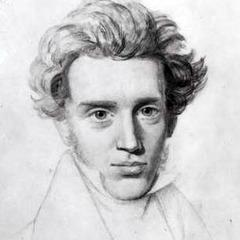
Soren Kierkegaard
Soren Kierkegaard

Søren Kierkegaard was a 19th-century Danish philosopher known for his existentialist philosophy and profound explorations of religious, ethical, and aesthetic issues. His ideas have had a profound impact on subsequent philosophers and literature. more

You May Also Like

“I pray we... come to this darkness so far above light! If only we lacked sight and knowledge so as to see, so as to know, unseeing and unknowing, that which lies beyond all vision and knowledge. For this would be really to see and to know: to praise the Transcendent One in a transcending way... We would be like sculptors who set out to carve a statue. They remove every obstacle to the pure view of the hidden image, and simply by the act of clearing aside they show up the beauty which is hidden.”

“When you say 'Yes' or promise something, you can very easily deceive yourself and others also, as if you had already done what you promised. It is easy to think that by making a promise you have at least done part of what you promised to do, as if the promise itself were something of value. Not at all! In fact, when you do not do what you promise, it is a long way back to the truth.”

“[Our Lord Jesus Christ] was... carried up to heaven (Lk. 24:50-51). With a radiant cloud for a chariot, He ascended in glory (cf. Acts 1:9), entered the Holy of Holies not made by hands and sat down on the right hand of the heavenly majesty, making our human substance share His own throne and divinity.”

“He who is accustomed to give account of his life at confession here will not fear to give an answer at the terrible judgment-seat of Christ. It is for this purpose that the mild tribunal of penitence was here initiated, in order that we, being cleansed and amended through penitence here below, may give an answer without shame at the terrible judgment-seat of Christ.”

“What has actually to be said about the Cause of everything is this. Since it is the Cause of all beings, we should posit and ascribe to it all the affirmations we make in regard to beings, and, more appropriately, we should negate all these affirmations, since It surpasses all being. Now we should not conclude that the negations are simply the opposites of the affirmations, but rather that the cause of all is considerably prior to this, beyond privations, beyond every denial, beyond every assertion.”