“Physick, says Sydenham, is not to bee learned by going to Universities, but hee is for taking apprentices; and says one had as good send a man to Oxford to learn shoemaking as practising physick.”
Quote by Thomas Sydenham
Work
Dr. Thomas Sydenham, 1624-1689: His Life and Original Writings
Dr. Thomas Sydenham, 1624-1689: His Life and Original Writings is a scholarly compilation that delves into the life and contributions of Dr. Thomas Sydenham, a prominent figure in the history of medicine. The book presents a detailed biography of Sydenham, highlighting his medical career and his impact on the field. It also features a selection of his seminal writings, showcasing his innovative approaches to diagnosis and treatment during the 17th century. more
Author
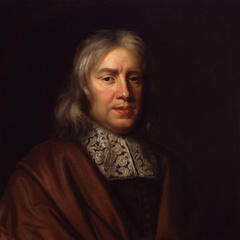
Thomas Sydenham
Thomas Sydenham, a renowned British physician, was born on September 10, 1624, in London, and died on December 29, 1689. He is considered one of the most important doctors in the history of British medicine, known for his contributions to medical practice and theory. more
You May Also Like
Source: Delphi Complete Works of Ambrose Bierce (Illustrated)
Source: The Great American fraud
“The art of healing is like an unroofed temple, uncovered at the top and cracked at the foundation.”
“The Nobel Prize is fine, but the drugs I've developed are rewards in themselves.”
Source: The works
Source: The Canon of Medicine (al-Qānūn Fī'l-ṭibb)
“There is only one cardinal rule: One must always listen to the patient.”
Source: Migraine