Quotessence
Home / Quotes / Quote by George Orwell

Quote by George Orwell

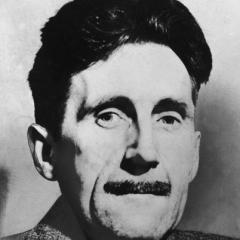
“Power is not a means; it is an end. One does not establish a dictatorship in order to safeguard a revolution; one makes the revolution in order to establish the dictatorship. The object of persecution is persecution. The object of torture is torture. The object of power is power.”

Quote by George Orwell

Book:1984

Work

1984

George Orwell's '1984' is a seminal work of literature that explores themes of government control, individuality, and the erosion of privacy. The story is set in a future where the world is divided into three superstates, each engaged in perpetual war. The protagonist, Winston Smith, works for the Ministry of Truth and is disillusioned with the oppressive regime. The novel delves into the psychological and societal consequences of living under constant surveillance and the struggle for truth and freedom. more

Author

George Orwell
George Orwell

George Orwell, born Eric Arthur Blair, was a British novelist and political critic. Known for his sharp social criticism and profound insights into totalitarianism, Orwell is best remembered for his novels '1984' and 'Animal Farm', which remain influential to this day. more

You May Also Like

“Ritual Version —for Kate Middleton humself, shamself, hymnself, shameself—. lameself, lambself, numbself, unself—. sing anger, goddess, of—. many devices—. sing anger godless—. tell me who—. sacred in the sea suffered so many woes—. bookshelf, doubtshelf, debtshelf, riftshelf—. driftshelf, truthshelf, foolshelf, rueshelf—. sing less the many souls sent—. they perished—. sing spoils for the dogs—. who swallowed down the foolish song—. the soul and its companions—. nounself, nonceself, nonself, lashself—. ashself, lawself, thoughtself, aughtself—. tell me, muse, from any point—. and birds—. sing less the wrath of—. a man’s cleverness—. tell also us—. of recklessness—. of home—.”

“Certainly, I believe that wilderness experiences are both restorative and essential on many levels. I am constantly contriving to get myself and my family out of the city to go hiking or camping in forests, mountains, and meadows in our Pacific Northwest home and beyond. But in making such experiences the core of our "connection to nature," we set up a chasm between our daily lives ("non-nature") and wilder places ("true nature"), even though it is in our everyday lives, in our everyday homes, that we eat, consume energy, run the faucet, compost, flush, learn, and live. It is here, in our lives, that we must come to know our essential connection to the wilder earth, because it is here, in the activity of our daily lives, that we most surely affect this earth, for good or for ill.”