Quotessence
Home / Quotes / Quote by John Dos Passos

Quote by John Dos Passos

“Ellen got off the bus at the corner of Fifth Avenue and Fiftythird Street. Rosy twilight was gushing out of the brilliant west, glittered in brass and nickel, on buttons, in people's eyes. All the windows on the east side of the avenue were aflame. As she stood with set teeth on the curb waiting to cross, a frail tendril of fragrance brushed her face. A skinny lad with towhair stringy under a foreignlooking cap was offering her arbutus in a basket. She bought a bunch and pressed her nose in it. May woods melted like sugar against her palate. The whistle blew, gears ground as cars started to pour out of the side streets, the crossing thronged with people. Ellen felt the lad brush against her as he crossed at her side. She shrank away. Through the smell of the arbutus she caught for a second the unwashed smell of his body, the smell of immigrants, of Ellis Island, of crowded tenements. Under all the nickelplated, goldplated streets enameled with May, uneasily she could feel the huddling smell, spreading in dark slow crouching masses like corruption oozing from broken sewers, like a mob. She walked briskly down the cross-street. She went in a door beside a small immaculately polished brass plate.”

Quote by John Dos Passos

Work

Manhattan Transfer

Browse quotes and source details for this work. more

Author
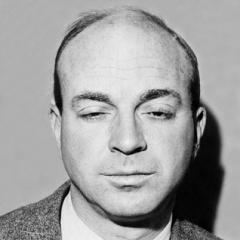
John Dos Passos
John Dos Passos

John Dos Passos was an American novelist born on January 14, 1896, and died on September 28, 1970. His works are known for their unique narrative style and profound insights into the realities of American society. more

You May Also Like

“You know I love you, right?” The urge to kiss her goodbye was so strong that I almost broke our rules. She smiled, beautiful and golden in the late morning light. “Not as much as I love you.” “Oh, man. This is my dream come true: having an ‘I love you more’ debate. Here, I’ll start. I love you more. Your turn.” Sydney laughed and opened the door. “I’ve taken debate classes. You’d lose to my logic.”

“For everyday purposes, we know and can say, e.g., whether an animal is alive or not. But, upon closer inquiry, we find that this is, in many cases, a very complex question, as the jurists know very well. They have cudgelled their brains in vain to discover a rational limit beyond which the killing of the child in its mother's womb is murder. It is just as impossible to determine absolutely the moment of death, for physiology proves that death is not an instantaneous, momentary phenomenon, but a very protracted process. In like manner, every organized being is every moment the same and not the same; every moment, it assimilates matter supplied from without, and gets rid of other matter; every moment, some cells of its body die and others build themselves anew; in a longer or shorter time, the matter of its body is completely renewed, and is replaced by other molecules of matter, so that every organized being is always itself, and yet something other than itself.”

“It makes me more than sad, it makes my heart burn within me, to see that folk can make a jest of earnest men; of chaps who comed to ask for a bit o' fire for th' old granny, as shivers in th' cold; for a bit o' bedding, and some warm clothing to the poor wife as lies in labour on th' damp flags; and for victuals for the childer, whose little voices are getting too faint and weak to cry aloud wi' hunger. For, brothers, is not them the things we ask for when we ask for more wage? We donnot want dainties, we want bellyfuls; we donnot want gimcrack coats and waistcoats, we want warm clothes, and so that we get 'em we'd not quarrel wi' what they're made on. We donnot want their grand houses, we want a roof to cover us from the rain, and the snow, and the storm; ay, and not alone to cover us, but the helpless ones that cling to us in the keen wind, and ask us with their eyes why we brought 'em into th' world to suffer?" He lowered his deep voice almost to a whisper. "I've seen a father who had killed his child rather than let it clem before his eyes; and he were a tender-hearted man." He began again in his usual tone. "We come to th' masters wi' full hearts, to ask for them things I named afore. We know that they've gotten money, as we've earned for 'em; we know trade is mending, and that they've large orders, for which they'll be well paid; we ask for our share o' th' payment; for, say we, if th' masters get our share of payment it will only go to keep servants and horses, to more dress and pomp. Well and good, if yo choose to be fools we'll not hinder you, so long as you're just; but our share we must and will have; we'll not be cheated. We want it for daily bread, for life itself; and not for our own lives neither (for there's many a one here, I know by mysel, as would be glad and thankful to lie down and die out o' this weary world), but for the lives of them little ones, who don't yet know what life is, and are afeard of death. Well, we come before th' masters to state what we want, and what we must have, afore we'll set shoulder to their work; and they say, 'No.' One would think that would be enough of hard-heartedness, but it isn't. They go and make jesting pictures of us! I could laugh at mysel, as well as poor John Slater there; but then I must be easy in my mind to laugh. Now I only know that I would give the last drop o' my blood to avenge us on yon chap, who had so little feeling in him as to make game on earnest, suffering men!”

“For this is England, a happy country, a land of miracles, where stones underfoot are nuggets of gold and the brooks flow with claret. The Boleyns' white falcon hangs like a sorry sparrow on a fence, while the Seymour phoenix is rising. Gentlefolk of an ancient breed, foresters, masters of Wolf Hall, the king's new family now rank with the Howards, the Talbots, the Percys and the Courtenays. The Cromwells - father, son and nephew - are of an ancient breed too. Were we not all conceived in Eden? When Adam delved and Eve span/Who was then the gentleman? When the Cromwells stroll out this week, the gentlemen of England get out of their way.”