“It makes me more than sad, it makes my heart burn within me, to see that folk can make a jest of earnest men; of chaps who comed to ask for a bit o' fire for th' old granny, as shivers in th' cold; for a bit o' bedding, and some warm clothing to the poor wife as lies in labour on th' damp flags; and for victuals for the childer, whose little voices are getting too faint and weak to cry aloud wi' hunger. For, brothers, is not them the things we ask for when we ask for more wage? We donnot want dainties, we want bellyfuls; we donnot want gimcrack coats and waistcoats, we want warm clothes, and so that we get 'em we'd not quarrel wi' what they're made on. We donnot want their grand houses, we want a roof to cover us from the rain, and the snow, and the storm; ay, and not alone to cover us, but the helpless ones that cling to us in the keen wind, and ask us with their eyes why we brought 'em into th' world to suffer?" He lowered his deep voice almost to a whisper. "I've seen a father who had killed his child rather than let it clem before his eyes; and he were a tender-hearted man." He began again in his usual tone. "We come to th' masters wi' full hearts, to ask for them things I named afore. We know that they've gotten money, as we've earned for 'em; we know trade is mending, and that they've large orders, for which they'll be well paid; we ask for our share o' th' payment; for, say we, if th' masters get our share of payment it will only go to keep servants and horses, to more dress and pomp. Well and good, if yo choose to be fools we'll not hinder you, so long as you're just; but our share we must and will have; we'll not be cheated. We want it for daily bread, for life itself; and not for our own lives neither (for there's many a one here, I know by mysel, as would be glad and thankful to lie down and die out o' this weary world), but for the lives of them little ones, who don't yet know what life is, and are afeard of death. Well, we come before th' masters to state what we want, and what we must have, afore we'll set shoulder to their work; and they say, 'No.' One would think that would be enough of hard-heartedness, but it isn't. They go and make jesting pictures of us! I could laugh at mysel, as well as poor John Slater there; but then I must be easy in my mind to laugh. Now I only know that I would give the last drop o' my blood to avenge us on yon chap, who had so little feeling in him as to make game on earnest, suffering men!”
Quote by Elizabeth Gaskell
Book:Mary Barton
Work
Mary Barton
Browse quotes and source details for this work. more
Author
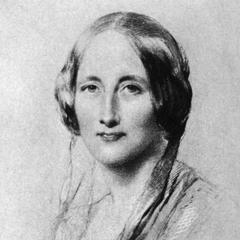
Elizabeth Gaskell
Elizabeth Gaskell was a British novelist born on September 29, 1810, in Manchester. Her works primarily depicted the social life of Britain during the Industrial Revolution, focusing on the lives of the working class. Gaskell is renowned for her delicate emotional portrayal and profound social insight, with notable works including 'Mary Barton' and 'North and South'. more
You May Also Like
Source: The Mirror & the Light
Source: Behave: The Biology of Humans at Our Best and Worst
Source: The Devil in Winter
Source: Combats et métamorphoses d'une femme
Source: Children of Dune
“EVERYTHING WE LOVE IS WELL ARRANGED DUST. - ATTICUS”
Source: Love Her Wild
Source: The Bennet Women
Source: Where We Stand: Class Matters
Source: Where We Stand: Class Matters
Source: The Shepherd's Life: A People's History of the Lake District