Quotessence
Home / Quotes / Quote by Hal Whitehead

Quote by Hal Whitehead

“Psychologists would say that the only two important forms of social learning are imitation and teaching, and they will spend time trying to figure out if animals imitate or teach. Sometimes they find they do; sometimes they find they don't. And so that's kind of the level of controversy there. Biologists would include imitation and teaching and a range of other kinds of social learning. So we would call that culture, whereas the psychologist wouldn't.”

Quote by Hal Whitehead

Author
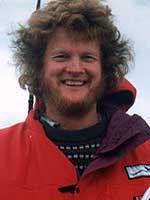
Hal Whitehead
Hal Whitehead

Hal Whitehead is a renowned marine biologist, born on July 29, 1952. His research focuses on the behavior of whales, particularly the social structures and migration patterns of humpback whales. Professor Whitehead's work is significant in understanding the social behavior and ecology of whales. more

You May Also Like

“The real controversy comes with anthropologists - not all, but some - who see themselves as studying culture, and they then see culture from the perspective of humans, which is what they study. From their perspective, or, from some of their perspectives, it's sort of heresy to even talk about culture in any other animal. Others would say, "Yeah, you can talk about it, but our definitions of culture are so utterly different from yours and include things like values, and so on, which you've never shown to exist in any of these other creatures."”

“We believe we're seeing, in other animals, a process, or an attribute, that isn't fundamentally different from what we see in humans, so it seems to us to be spurious to call them different things. Now there are aspects of human culture that we don't find in animals, and that's really interesting, but there are also probably aspects of animal cultures that we don't find in humans, and that's really interesting.”

“Humans are particularly interesting; our culture is incredible, there's no doubt about that. In many respects, no other species matches ours. But in quite a few respects, they do, and that can help us, perhaps, to better understand our own culture. We look at the ways humans are similar to other animals, and at the ways they differ, rather than just saying, "We have culture and you don't."”

“I was very lucky. I was just finishing my PhD at Cambridge in 1981. This opportunity came up because whaling was drawing to an end. There was the prospect of a moratorium, and one of the arguments that was brought up, especially by Japanese whalers, was that, if we didn't have whaling, we would know nothing of whales. All the science depends on having dead animals, they argued, so that's one of the benefits of the whaling industry.”

“I spend most of my time in South Korea but at least one-third of my time is spent traveling around the world, meeting people, speaking about climate change and sustainable development and trying to foster global citizenship especially for young people. What I observe is there clearly is a need for global citizenship. That is exactly right. We are having troubles around the world. We need global vision.”