Quotessence
Home / Quotes / Quote by Saul Kripke

Quote by Saul Kripke

“Certainly the philosopher of 'possible worlds' must take care that his technical apparatus not push him to ask questions whose meaningfulness is not supported by our original intuitions of possibility that gave the apparatus its point.”

Quote by Saul Kripke

Author
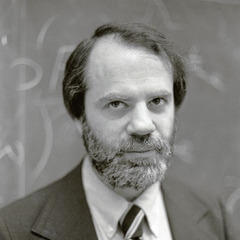
Saul Kripke
Saul Kripke

Saul Kripke is a prominent philosopher recognized for his work in modal logic, metaphysics, and the philosophy of language. Born on November 13, 1940, he has made substantial contributions to the discipline of philosophy, particularly with his theory of possible worlds and his philosophy of mind. Kripke's work has had a significant impact on contemporary philosophical discourse. more

You May Also Like

“Let's call something a rigid designator if in every possible world it designates the same object, a non-rigid or accidental designator if that is not the case. Of course we don't require that the objects exist in all possible worlds.... When we think of a property as essential to an object we usually mean that it is true of that object in any case where it would have existed. A rigid designator of a necessary existent can be called strongly rigid.”

“Girls tend to attribute their failures to factors such as lack of ability, while boys tend to attribute failure to specific factors, including teachers' attitudes. Moreover, girls avoid situations in which failure is likely, whereas boys approach such situations as a challenge, indicating that failure differentially affects self-esteem.”

“In a famous Middletown study of Muncie, Indiana, in 1924, mothers were asked to rank the qualities they most desire in their children. At the top of the list were conformity and strict obedience. More than fifty years later, when the Middletown survey was replicated, mothers placed autonomy and independence first. The healthiest parenting probably promotes a balance of these qualities in children.”

“I do not mean to imply that the good old days were perfect. But the institutions and structure--the web--of society needed reform,not demolition. To have cut the institutional and community strands without replacing them with new ones proved to be a form of abuse to one generation and to the next. For so many Americans, the tragedy was not in dreaming that life could be better; the tragedy was that the dreaming ended.”

“Today's children are living a childhood of firsts. They are the first daycare generation; the first truly multicultural generation; the first generation to grow up in the electronic bubble, the environment defined by computers and new forms of television; the first post-sexual revolution generation; the first generation for which nature is more abstraction than reality; the first generation to grow up in new kinds of dispersed, deconcentrated cities, not quite urban, rural, or suburban.”

“We attempt to remember our collective American childhood, the way it was, but what we often remember is a combination of real past, pieces reshaped by bitterness and love, and, of course, the video past--the portrayals of family life on such television programs as "Leave it to Beaver" and "Father Knows Best" and all the rest.”

“Rather than accepting the drifting separation of the generations, we might begin to define a more complex and interesting set of life stages and parenting passages, each emphasizing the connections to the generations ahead and behind. As I grow older, for example, I might first see my role as a parent in need of older, mentoring parents, and then become a mentoring parent myself. When I become a grandparent, I might expect to seek out older mentoring grandparents, and then later become a mentoring grandparent.”