“A monopoly granted either to an individual or to a trading company has the same effect as a secret in trade or manufactures. The monopolists, by keeping the market constantly understocked, by never fully supplying the effectual demand, sell their commodities much above the natural price, and raise their emoluments, whether they consist in wages or profit, greatly above their natural rate.”
Quote by Adam Smith
Work
Adam Smith: Selected Philosophical Writings
Adam Smith: Selected Philosophical Writings is a compilation of key essays and treatises by the renowned economist and philosopher Adam Smith. The book delves into Smith's influential theories on economics, including the concept of the invisible hand, and his moral philosophy, which laid the groundwork for modern capitalism. more
Author
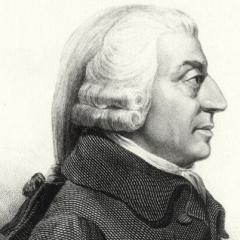
Adam Smith
Adam Smith, a renowned philosopher and economist from Britain, was born on June 5, 1723, and died on July 17, 1790. Known as the father of modern economics, his work 'The Wealth of Nations' had a profound impact on the development of economics. more
You May Also Like
Source: An inquiry into the nature and causes of the wealth of nations
Source: An inquiry into the nature and causes of the wealth of nations
Source: An Inquiry into the Nature and Causes of the Wealth of Nations, Volume 2
Source: An Inquiry Into the Nature and Causes of the Wealth of Nations With a Life of the Author: Also a View of the Doctrine of Smith, Compared with that of the French Economists, with a Method of Facilitating the Study of His Works, from the French of M. Jariner
Source: An inquiry into the nature and causes of the wealth of nations
Source: An inquiry into the nature and causes of the wealth of nations
Source: An Inquiry Into the Nature and Causes of the Wealth of Nations With a Life of the Author: Also a View of the Doctrine of Smith, Compared with that of the French Economists, with a Method of Facilitating the Study of His Works, from the French of M. Jariner