Quotessence
Home / Quotes / Quote by Richard Hofstadter

Quote by Richard Hofstadter

“Arthur Schlesinger, Jr., in a mordant protest written soon after the [1952] election, found the intellectual "in a situation he has not known for a generation." After twenty years of Democratic rule, during which the intellectual had been in the main understood and respected, business had come back into power, bringing with it "the vulgarization which has been the almost invariable consequence of business supremacy.”

Quote by Richard Hofstadter

Author
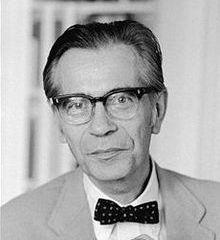
Richard Hofstadter
Richard Hofstadter

Richard Hofstadter, an American historian, was born on August 6, 1916, and passed away on October 24, 1970. Known for his profound insights into American history and society, Hofstadter is particularly recognized for his work on the history of American politics and intellectual life. His contributions have had a significant impact on historians that followed. more

You May Also Like

“Anti-intellectualism ... has been present in some form and degree in most societies; in one it takes the form of the administering of hemlock, in another of town-and-gown riots, in another of censorship and regimentation, in still another of Congressional investigations.”

“As somebody who, in my second marriage, insisted on a prenuptial agreement, I can also testify that sometimes it is an act of love to chart the exit strategy before you enter the union, in order to make sure that not only you, but your partner as well, knows that there will be no World War III should hearts and minds, for any sad reason, change.”

“It is the historic glory of the intellectual class of the West in modern times that, of all the classes which could be called in any sense privileged, it has shown the largest and most consistent concern for the well-being of the classes which lie below it in the social scale.”

“The intellectual ... may live for ideas, as I have said, but something must prevent him from living for one idea, from becoming obsessive or grotesque. Although there have been zealots whom we may still regard as intellectuals, zealotry is a defect of the breed and not of the essence.”

“In using the terms play and playfulness, I do not intend to suggest any lack of seriousness; quite the contrary. Anyone who has watched children, or adults, at play will recognize that there is no contradiction between play and seriousness, and that some forms of play induce a measure of grave concentration not so readily called forth by work.”

“The intellectual's ... playfulness, in its various manifestations, is likely to seem to most men a perverse luxury; in the United States the play of the mind is perhaps the only form of play that is not looked upon with the most tender indulgence. His piety is likely to seem nettlesome, if not actually dangerous. And neither quality is considered to contribute very much to the practical business of life.”