“Stranger in a strange country.”
Quote by Sophocles
Work
Sophocles I: Antigone, Oedipus the King, Oedipus at Colonus
Sophocles' tragedies are foundational texts in the Western literary tradition. Antigone depicts the conflict between individual honor and the law, Oedipus the King is a tale of tragic destiny and the downfall of a king, and Oedipus at Colonus portrays the final stages of Oedipus' life. These plays are celebrated for their complex characters, poetic language, and philosophical depth. more
Author
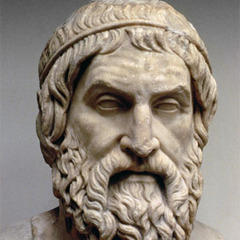
Sophocles
Sophocles, born in 498 BC and died in 406 BC, was a renowned Greek tragic playwright. He is one of the three greatest tragic poets of ancient Greece, alongside Aeschylus and Euripides. Sophocles' works profoundly revealed the complexity of human nature and social contradictions, exerting a profound influence on subsequent drama. more
You May Also Like
Source: Law and Order
Source: The Works of Theodore Roosevelt
Source: Works: The strenuous life
Source: Controversial Essays
“The first step in calculating which way to go is to find out where you are.”