Quotessence
Home / Quotes / Quote by Mark Helprin

Quote by Mark Helprin

“A tranquil city of good laws, fine architecture, and clean streets is like a classroom of obedient dullards, or a field of gelded bulls - whereas a city of anarchy is a city of promise.”

Quote by Mark Helprin

Author
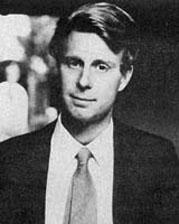
Mark Helprin
Mark Helprin

Mark Helprin is an American novelist born on June 28, 1947. His works are known for their rich imagination, profound philosophical insights, and unique narrative style. more

You May Also Like

“This world of ours is a new world, in which the unit of knowledge, the nature of human communities, the order of society, the order of ideas, the very notions of society and culture have changed, and will not return to what they have been in the past. What is new is new, not because it has never been there before, but because it has changed in quality.”

“The growing complexity of science, technology, and organization does not imply either a growing knowledge or a growing need for knowledge in the general population. On the contrary, the increasingly complex processes tend to lead to increasingly simple and easily understood products. The genius of mass production is precisely in its making more products more accessible, both economically and intellectually to more people.”

“Perhaps the most widespread misunderstanding of economics is that it applies solely to financial transactions. Frequently this leads to statements that "there are noneconomic values" to consider. There are, of course, noneconomic values. Indeed, there are only noneconomic values. Economics is not a value itself but merely a method of trading off one value against another.”

“Price fixing does not represent simply windfall gains and losses to particular groups according to whether the price happens to be set higher or lower than it would be otherwise. It represents a net lose to the economy as a whole to the extent that many transactions do not take place at all, because the mutually acceptable possibilities have been reduced.”

“Since man does not create physical matter, those who handle material objects in the production process are not producers in that sense. Economic benefits result from the transformation of matter in form, location, or availability (intellectually or temporally). It is these transformations that create economic benefits valued by consumers, and whoever arranges such transformations contributes to the value of things, whether his hands actually come into contact with physical objects or not.”