Quotessence
Home / Quotes / Quote by Charles Lindbergh

Quote by Charles Lindbergh

Work

The Spirit of St. Louis

This book offers a detailed narrative of Charles Lindbergh's historic journey across the Atlantic Ocean in the Spirit of St. Louis, highlighting the challenges and triumphs of the first solo non-stop flight from New York to Paris. more

Author
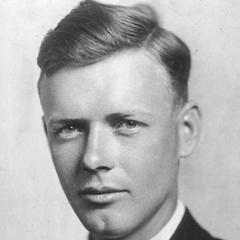
Charles Lindbergh
Charles Lindbergh

Charles Lindbergh, born on February 4, 1902, and died on August 26, 1974, was an American aviator renowned for his historic non-stop solo transatlantic flight in 1927. His flight, which he named 'The Spirit of St. Louis', not only broke records but also significantly advanced the field of aviation, inspiring generations of pilots. more

You May Also Like

“It is no small advantage to the holy life, to "begin the day with God." The saints are wont to leave their hearts with him over-night, that they may find them with Him in the morning. "When I awake, I am still with thee," saith holy David. Before earthly things break in upon us, and we receive impressions from abroad, it is good to season the heart with thoughts of God, and to consecrate the early and virgin operations of the mind.”

“For as a city which has been once besieged and not sacked will ever after be more strong to hold out if it be assaulted by the like danger.... so those who are besieged and assaulted by their spiritual enemies will ever after more carefully arm themselves against them with the graces of God's Spirit, that they may not be overcome nor foiled by them.”

“...learning chiefly in mathematical sciences can so swallow up and fix one's thought, as to possess it entirely for some time; but when that amusement is over, nature will return, and be where it was, being rather diverted than overcome by such speculations.”

“They have never affirm'd any thing, concerning the cause, till the trial was past: whereas, to do it before, is a most venomous thing in the making of Sciences: for whoever has fix'd on his Cause, before he has experimented; can hardly avoid fitting his Experiment, and his Observations, to his Own Cause, which he had before imagin'd; rather than the Cause to the Truth of the Experiment itself. Referring to experiments of the Aristotelian mode, whereby a preconceived truth would be illustrated merely to convince people of the validity of the original thought.”

“As historians, we refuse to allow ourselves these vain speculations which turn on possibilities that, in order to be reduced to actuality, suppose an overturning of the Universe, in which our globe, like a speck of abandoned matter, escapes our vision and is no longer an object worthy of our regard. In order to fix our vision, it is necessary to take it such as it is, to observe well all parts of it, and by indications infer from the present to the past.”