“Therefore, the central point which we see in the centre of the hieroglyphic Monad produces the Earth , round which the Sun , the Moon , and the other planets follow their respective paths. The Sun has the supreme dignity , and we represent him by a circle having a visible centre.”
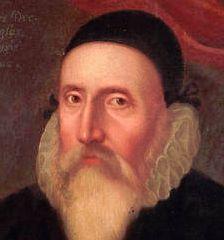
Quote by John Dee
Work
John Dee: Essential Readings
This compilation includes key texts and correspondence that explore Dee's contributions to mathematics, astronomy, and esoteric philosophy, offering insights into his life and thought. more
Author
You May Also Like
“science is the most revolutionary force in the world.”
Source: A Guide to the History of Science: A First Guide for the Study of the History of Science, with Introductory Essays on Science and Tradition
Source: The Teaching of the History of Science
Source: A History of Science: Ancient Science Through the Golden Age of Greece
“Erudition without pedantry is as a rare as wisdom itself.”
Source: A History of Science: Ancient Science Through the Golden Age of Greece
Source: Ancient Science Through the Golden Age of Greece
Source: A History of Science: Ancient Science Through the Golden Age of Greece
Source: A History of Science: Ancient Science Through the Golden Age of Greece
Source: Ancient Science Through the Golden Age of Greece
Source: Ancient Science Through the Golden Age of Greece
Source: A History of Science: Ancient Science Through the Golden Age of Greece