Quotessence
Home / Quotes / Quote by Benjamin Disraeli

Quote by Benjamin Disraeli

Work

Curiosities of literature

This book delves into the intricacies and significance of various literary masterpieces, offering insights into the lives and works of renowned authors. more

Author
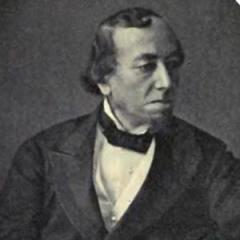
Benjamin Disraeli
Benjamin Disraeli

Benjamin Disraeli was a prominent British politician who served as the Leader of the House of Commons. Born on December 21, 1804, in London, he passed away on April 19, 1881. Disraeli was known for his political acumen, oratory skills, and literary achievements. more

You May Also Like

“Just by studying mathematics we can hope to make a guess at the kind of mathematics that will come into the physics of the future... If someone can hit on the right lines along which to make this development, it may lead to a future advance in which people will first discover the equations and then, after examining them, gradually learn how to apply them... My own belief is that this is a more likely line of progress than trying to guess at physical pictures.”

“Let us keep the discoveries and indisputable measurements of physics. But ... A more complete study of the movements of the world will oblige us, little by little, to turn it upside down; in other words, to discover that if things hold and hold together, it is only by reason of complexity, from above.”

“Most of the crackpot papers which are submitted to The Physical Review are rejected, not because it is impossible to understand them, but because it is possible. Those which are impossible to understand are usually published. When the great innovation appears, it will almost certainly be in a muddled, incomplete and confusing form. To the discoverer himself it will be only half-understood; to everybody else it will be a mystery. For any speculation which does not at first glance look crazy, there is no hope.”

“Next came the Patent laws. These began in England in 1624; and, in this country, with the adoption of our constitution. Before then [these?], any man might instantly use what another had invented; so that the inventor had no special advantage from his own invention. The patent system changed this; secured to the inventor, for a limited time, the exclusive use of his invention; and thereby added the fuel of interest to the fire of genius, in the discovery and production of new and useful things.”

“No one can take from us the joy of the first becoming aware of something, the so-called discovery. But if we also demand the honor, it can be utterly spoiled for us, for we are usually not the first. What does discovery mean, and who can say that he has discovered this or that? After all it's pure idiocy to brag about priority; for it's simply unconscious conceit, not to admit frankly that one is a plagiarist.”