“Most of the crackpot papers which are submitted to The Physical Review are rejected, not because it is impossible to understand them, but because it is possible. Those which are impossible to understand are usually published. When the great innovation appears, it will almost certainly be in a muddled, incomplete and confusing form. To the discoverer himself it will be only half-understood; to everybody else it will be a mystery. For any speculation which does not at first glance look crazy, there is no hope.”
Quote by Freeman Dyson
Author
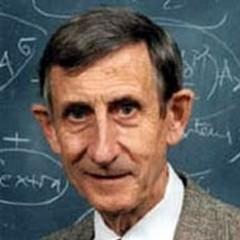
Freeman Dyson
Freeman Dyson is an accomplished theoretical physicist known for his contributions to quantum electrodynamics, cosmology, and nuclear physics. He has worked at institutions such as the Institute for Advanced Study and the University of Cambridge, and has been honored for his innovative research and ideas. more
You May Also Like
“It may be that our role on this planet is not to worship God - but to create him.”
Source: A Mathematician's Apology
Source: Advice for a Young Investigator
Source: Newton: Philosophical Writings
Source: Leonardo Da Vinci on Painting: A Lost Book (Libro A)
Source: The Origins of Modern Philosophy of Science, 1830-1914: Preliminary discourse on the study of natural philosophy