Quotessence
Home / Quotes / Quote by Charles Dickens

Quote by Charles Dickens

“Mrs. Crupp had indignantly assured him that there wasn't room to swing a cat there; but as Mr. Dick justly observed to me, [...] "You know, Trotwood, I don't want to swing a cat. I never do swing a cat. Therefore, what does that signify to me!”

Quote by Charles Dickens

Work

David Copperfield

David Copperfield is a semi-autobiographical novel by Charles Dickens, published in 1850. The story is narrated by the protagonist, David Copperfield, who recounts his life experiences, including his abusive stepfather, his time at school, his first love, and his career as a writer. The novel is renowned for its vivid portrayal of Victorian society and its exploration of themes such as resilience, love, and the struggle for social mobility. more

Author

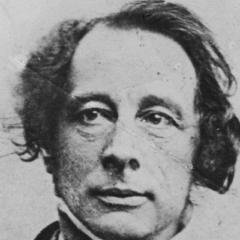
Charles Dickens
Charles Dickens

Charles Dickens, a British writer born on February 7, 1812, and died on June 9, 1870, is one of the greatest novelists of the 19th century. Known for his profound social criticism and vivid narrative style, Dickens' works extensively cover social reality, revealing various issues in the British society of the time. more

You May Also Like

“Shedding an independent, individualistic sense of self, is an apt place to start when remaking oneself. The task of divesting my egoistic coat-of-arms requires that I first understand how I came into being, ascertain how a person forges a baseline personality, and discover how I can modify my template for self-construal. I need to surrender an arrogant sense of self-importance, acknowledge towering ignorance, and learn how to live humbly. I hope to parlay personal humiliation and self-hatred into a transformative act by invoking a spiritual death of my egotistical being that results in a resurrection of a more astute and kinder human being.”

“As St. Paul says, what matters isn't so much our knowledge of God as God's knowledge of us; not, as it were, the god we want but the God who wants us. God help us, we don't understand ourselves; how can we expect to understand that Self which stands beside our selves like Niagara beside a trickling tap?”