“The free development of each is the condition for the free development of all.”
Quote by Friedrich Engels
Work
The Communist Manifesto in Plain and Simple English
This book provides a clear and accessible version of the influential work 'The Communist Manifesto,' originally written in German by Karl Marx and Friedrich Engels. It aims to make the complex ideas and arguments of the original text more comprehensible to a general audience. The translation is designed to be easy to follow, while still maintaining the integrity of the original work's content and message. more
Author
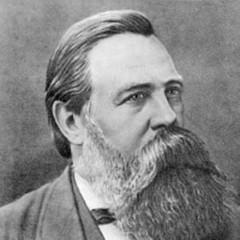
Friedrich Engels
Friedrich Engels was a German philosopher, politician, economist, and revolutionary, co-founder of communist theory with Karl Marx. He was born on November 28, 1820, and died on August 5, 1895. more
You May Also Like
Source: Basic writings on politics and philosophy
Source: Karl Marx and Frederick Engels: selected correspondence, 1846-1895
Source: The Communist Manifesto: A Road Map to History's Most Important Political Document
Source: Selected works [of] Karl Marx and Frederick Engels
Source: Collected Works