Quotessence
Home / Quotes / Quote by James M. Cain

Quote by James M. Cain

Work

Double Indemnity

A gripping tale of insurance fraud and murder, Double Indemnity delves into the dark underbelly of human ambition and corruption. The story follows a struggling insurance salesman and a glamorous woman who conspire to commit the perfect crime, only to find themselves entangled in a web of deceit and danger. more
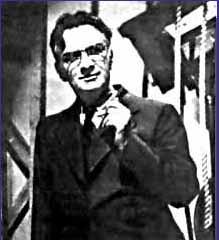
Author

James M. Cain
James M. Cain

James M. Cain was an American author known for his crime novels and noir fiction. His works, often featuring hard-boiled detectives, had a profound impact on 20th-century American literature. more

You May Also Like

“You know what that reflects? Unsatisfied lives. Unfulfilled lives. Lives that haven't found meaning . Because if you've found meaning in your life, you don't want to go back. You want to go forward. You want to see more, do more. You can't wait until sixty-five.”

“At its best, fantasy rewards the reader with a sense of wonder about what lies within the heart of the commonplace world. The greatest tales are told over and over, in many ways, through centuries. Fantasy changes with the changing times, and yet it is still the oldest kind of tale in the world, for it began once upon a time, and we haven't heard the end of it yet.”

“I believe that my theory is correct; for whatever be the question upon which I am arguing, whether it be religious, philosophical, political, or economical; whether it affects well-being, morality, equality, right, justice, progress, responsibility, property, labor, exchange, capital, wages, taxes, population, credit, or Government; at whatever point of the scientific horizon I start from, I invariably come to the same thing—the solution of the social problem is in liberty.”

“Once leprosy had gone, and the figure of the leper was no more than a distant memory, these structures still remained. The game of exclusion would be played again, often in these same places, in an oddly similar fashion two or three centuries later. The role of the leper was to be played by the poor and by the vagrant, by prisoners and by the 'alienated', and the sort of salvation at stake for both parties in this game of exclusion is the matter of this study.”