Quotessence
Home / Quotes / Quote by Ella Wheeler Wilcox

Quote by Ella Wheeler Wilcox

Work

Complete Poetical Works of Ella Wheeler Wilcox (Delphi Classics)

The Complete Poetical Works of Ella Wheeler Wilcox (Delphi Classics) is a comprehensive compilation of the poet's work. It encompasses a variety of themes and styles, showcasing Wilcox's talent and influence in the realm of poetry. The collection is curated by Delphi Classics, a publisher known for its editions of classic literature. more

Author
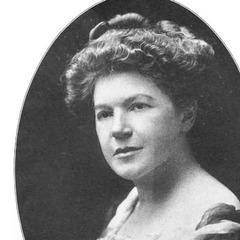
Ella Wheeler Wilcox
Ella Wheeler Wilcox

Ella Wheeler Wilcox was an American author known for her poetry and inspirational writings. Her works emphasized personal freedom, a positive attitude towards life, and women's rights. Born on November 5, 1850, she passed away on October 30, 1919. more

You May Also Like

“Arabia was idolatrous when, six centuries after Jesus, Muhammad introduced the worship of the God of Abraham, of Ishmael, of Moses, and Jesus. The Ariyans and some other sects had disturbed the tranquility of the east by agitating the question of the nature of the Father, the son, and the Holy Ghost. Muhammad declared that there was none but one God who had no father, no son and that the trinity imported the idea of idolatry.”

“I have always held the religion of Muhammad in high estimation because of its wonderful vitality. It is the only religion which appears to me to possess that assimilating capability to the changing phase of existence which can make itself appeal to every age... I have studied him - the wonderful man, and in my opinion far from being an Anti-Christ he must be called the Saviour of Humanity.”

“I have prophesied about the faith of Muhammad that it would be acceptable to the Europe of tomorrow as it is beginning to be acceptable to the Europe of today. ... I believe that if a man like him were to assume the dictatorship of the modern world he would succeed in solving its problems in a way that would bring it the much-needed peace and happiness.”

“Our use of the phrase 'The Dark Ages' to cover the period from 600 to 1000 marks our undue concentration on Western Europe. [...] From India to Spain, the brilliant civilisation of Islam flourished. What was lost to Christendom at this time was not lost to civilisation, but quite the contrary. [...] To us it seems that West-European civilisation is civilisation, but this is a narrow view.”

“The Islamic teachings have left great traditions for equitable and gentle dealings and behavior, and inspire people with nobility and tolerance. These are human teachings of the highest order and at the same time practicable. These teachings brought into existence a society in which hard-heartedness and collective oppression and injustice were the least as compared with all other societies preceding it....Islam is replete with gentleness, courtesy, and fraternity.”