Quotessence
Home / Quotes / Quote by Roger Bacon

Quote by Roger Bacon

“All science requires mathematics. [Editors' summary of Bacon's idea, not Bacon's wording.]”

Quote by Roger Bacon

Author
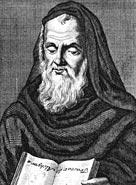
Roger Bacon
Roger Bacon

Roger Bacon (c. 1214–1294) was an English Franciscan friar, philosopher, and early advocate of the scientific method. He emphasized empirical observation and mathematics as essential tools for understanding nature. Educated at Oxford and the University of Paris, Bacon was influenced by Aristotle and Arabic science. His major work, Opus Majus, covered optics, linguistics, astronomy, and alchemy, and included descriptions of gunpowder and futuristic inventions like flying machines. Despite facing suspicion and imprisonment by church authorities for his unconventional ideas, Bacon's contributions laid groundwork for the later Scientific Revolution. He is remembered as a pioneering thinker who challenged dogma and championed experimental science. more

You May Also Like

“But we must here state that we should not see anything if there were a vacuum. But this would not be due to some nature hindering species, and resisting it, but because of the lack of a nature suitable for the multiplication of species; for species is a natural thing, and therefore needs a natural medium; but in a vacuum nature does not exist.”

“A mathematician, like a painter or poet, is a maker of patterns. If his patterns are more permanent than theirs, it is because they are made with ideas.”

“Again and again, faith in a possible satisfaction of the human race breaks through at the very moments of most zealous discord because humankind will never be able to live and work without this consoling delusion of its ascent into morality, without this dream of final and ultimate accord.”

“In their overestimation of the role of civilization, the humanists misunderstand the primary forces of the world of primitive human drives with their untamable violence. With their optimistic view of the role of culture, they (the humanists) trivialize the terrifying, hardly solvable problems of mass hatred and of the great passionate psychoses of the human race.”

“Erasmus was the light of his century; others were its strength: he lighted the way; others knew how to walk on it while he himselfremained in the shadow as the source of light always does. But he who points the way into a new era is no less worthy of veneration than he who is the first to enter it; those who work invisibly have also accomplished a feat.”

“Every epoch which seeks renewal first projects its ideal into a human form. In order to comprehend its own essence tangibly, the spirit of the time chooses a human being as its prototype and raising this single individual, often one upon whom it has chanced to come, far beyond his measure, the spirit enthuses itself for its own enthusiasm.”