Quotessence
Home / Quotes / Quote by Stephen Jay Gould

Quote by Stephen Jay Gould

“The contingency of history (both for life in general and for the cultures of Homo sapiens ) and human free will (in the factual rather than theological sense) are conjoined concepts, and no better evidence can be produced than the "experimental" production of markedly different solutions in identical environments.”

Quote by Stephen Jay Gould

Work

Eight little piggies: reflections in natural history

This book offers a series of essays and observations that delve into the intricacies of the natural world, examining the lives of animals, the impact of human activity, and the beauty of the environment. The author uses a unique perspective to explore the connections between nature and human life, providing readers with a deeper understanding of the natural world. more

Author
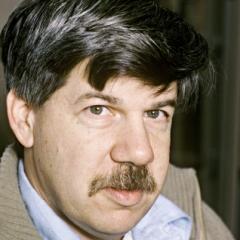
Stephen Jay Gould
Stephen Jay Gould

Stephen Jay Gould was a renowned paleontologist, evolutionary theorist, science writer, and academic. He is known for his work in ornithology, paleontology, evolutionary theory, and speciation. Gould's writings and papers have had a profound impact on the scientific community, and he was a long-time contributor to the journal 'Nature'. more

You May Also Like

“I am not [...] asserting that humans are either genial or aggressive by inborn biological necessity. Obviously, both kindness and violence lie within the bounds of our nature because we perpetrate both, in spades. I only advance a structural claim that social stability rules nearly all the time and must be based on an overwhelmingly predominant (but tragically ignored) frequency of genial acts, and that geniality is therefore our usual and preferred response nearly all the time. [...] [T]he center of human nature is rooted in ten thousand ordinary acts of kindness that define our days.”

“[T]ruly grand and powerful theories [...] do not and cannot rest upon single observations. Evolution is an inference from thousands of independent sources, the only conceptual structure that can make unified sense of all this disparate information. The failure of a particular claim usually records a local error, not the bankruptcy of a central theory. [...] If I mistakenly identify your father's brother as your own dad, you don't become genealogically rootless and created de novo. You still have a father; we just haven't located him properly.”

“We can now determine, easily and relatively cheaply, the detailed chemical architecture of genes ; and we can trace the products of these genes ( enzymes and proteins ) as they influence the course of embryology . In so doing we have made the astounding discovery that all complex animal phyla - arthropods and vertebrates in particular - have retained, despite their half-billion years of evolutionary independence, an extensive set of common genetic blueprints for building bodies.”

“Evolving life must experience a vast range of possibilities, based on environmental histories so unpredictable that no realized route - the pathway to consciousness in the form of Homo sapiens or Little Green Men, for example - can be construed as a highway to heaven, but must be viewed as a tortuous track rutted with uncountable obstacles and festooned with innumerable alternative branches. Any reasonably precise repetition of our earthly route on another planet therefore becomes wildly improbable even in a trillion cases.”

“The classical argument for why a supposedly decent and moral creature like Homo sapiens can mistreat and even extirpate other species rests upon an extreme position in a continuum. The Cartesian tradition, formulated explicitly in the seventeenth century, but developed in "folk" and other versions throughout human history no doubt, holds that other animals are little more than unfeeling machines, with only humans enjoying "consciousness," however defined.”

“[G]enes make enzymes, and enzymes control the rates of chemical processes. Genes do not make "novelty seeking" or any other complex and overt behavior. Predisposition via a long chain of complex chemical reactions, mediated through a more complex series of life's circumstances, does not equal identification or even causation.”