Quotessence
Home / Quotes / Quote by Wilhelm von Humboldt

Quote by Wilhelm von Humboldt

“Natural objects themselves, even when they make no claim to beauty, excite the feelings, and occupy the imagination. Nature pleases, attracts, delights, merely because it is nature. We recognize in it an Infinite Power.”

Quote by Wilhelm von Humboldt

Author
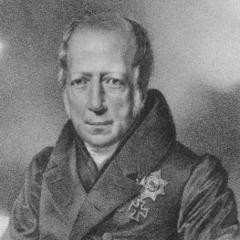
Wilhelm von Humboldt

German philosopher, educator, and linguist, known as the 'Father of Educational Reform'. Wilhelm von Humboldt was born on June 22, 1767, and died on April 8, 1835. He had profound insights into education, language, and culture, which had a lasting impact on the world. more

You May Also Like

“For optimal health, we need body and spirit, exercise (ming) and meditation, awareness of the inner world and the outer. In other words, health requires balance and moderation. The goal of qigong may be summarized as xing ming shuang xiu,spirit and body equally refined and cultivated. Cultivate your whole being, as you would cultivate a garden with attention, care, and even love.”

“We were enclosed, O eternal Father, within the garden of your breast. You drew us out of your holy mind like a flower petaled with our soul's three powers and into each power you put the whole plant, so that they might bear fruit in your garden, might come back to you with the fruit you gave them. And you would come back to the soul, to fill her with your blessedness. There the soul dwells like the fish in the sea and the sea in the fish.”

“The soul of the just man is but a paradise, in which, God tells us, He takes His delight. What do you imagine, must that dwelling be in which a King so mighty, so wise, and so pure, containing in Himself all good, can delight to rest? Nothing can be compared to the great beauty and capabilities of a soul; however keen our intellects may be, they are as unable to comprehend them as to comprehend God, for, as He told us, He created us in his own image and likeness.”

“And more than once in the course of time, the same theme reappears: among the mystics of the fifteenth century, it has become the motif of the soul as a skiff, abandoned on the infinite sea of desires, in the sterile field of cares and ignorance, among the mirages of knowledge, amid the unreason of the world - a craft at the mercy of the sea's great madness, unless it throws out a solid anchor, faith, or raises its spiritual sails so that the breath of God may bring it to port.”