Quotessence
Home / Quotes / Quote by Philip Larkin

Quote by Philip Larkin

“Heads in the Women's Ward On pillow after pillow lies The wild white hair and staring eyes; Jaws stand open; necks are stretched With every tendon sharply sketched; A bearded mouth talks silently To someone no one else can see. Sixty years ago they smiled At lover, husband, first-born child. Smiles are for youth. For old age come Death's terror and delirium.”

Quote by Philip Larkin

Author
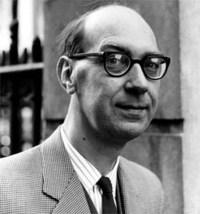
Philip Larkin
Philip Larkin

Philip Larkin (August 9, 1922 – December 2, 1985) was a renowned English poet, novelist, and librarian. He is widely regarded as one of the greatest poets of post-war Britain, known for his concise, bleak, and ironic style. Born in Coventry, Larkin studied at St John's College, Oxford. His major works include the poetry collections 'The Whitsun Weddings' and 'High Windows', and the novel 'Jill'. He spent most of his career as librarian at the University of Hull. Larkin's poetry often explores themes of death, loneliness, love, and the absurdity of everyday life. He rejected modernism in favor of traditional forms, and his precise, musical language earned him the Queen's Gold Medal for Poetry. His work continues to influence poets and readers worldwide. more

You May Also Like

“but ignorance is a kind of insanity in the human animal. People who delight in torturing defenseless children or tiny creatures are in reality insane. The terrible thing is that people who are madmen in private may wear a totally bland and innocent expression in public.”

“He spoke of very simple things- that it is right for a gull to fly, that freedom is the very nature of his being, that whatever stands against that freedom must be set aside, be it ritual or superstition or limitation in any form. "Set aside," came a voice from the multitude, "even if it be the Law of the Flock?" "The only true law is that which leads to freedom," Jonathan said. "There is no other.”

“I saw in their eyes something I was to see over and over in every part of the nation- a burning desire to go, to move, to get under way, anyplace, away from any Here. They spoke quietly of how they wanted to go someday, to move about, free and unanchored, not toward something but away from something. I saw this look and heard this yearning everywhere in every states I visited. Nearly every American hungers to move.”

“One day, quite some time ago, I happened on a photograph of Napoleon’s youngest brother, Jerome, taken in 1852. And I realized then, with an amazement I have not been able to lessen since: ‘I am looking at eyes that looked at the Emperor.’ Sometimes I would mention this amazement, but since no one seemed to share it, nor even to understand it (life consists of these little touches of solitude), I forgot about it.”

“But I never looked like that!’ - How do you know? What is the ‘you’ you might or might not look like? Where do you find it - by which morphological or expressive calibration? Where is your authentic body? You are the only one who can never see yourself except as an image; you never see your eyes unless they are dulled by the gaze they rest upon the mirror or the lens (I am interested in seeing my eyes only when they look at you): even and especially for your own body, you are condemned to the repertoire of its images.”

“Asking the proper question is the central action of transformation- in fairy tales, in analysis, and in individuation. The key question causes germination of consciousness. The properly shaped question always emanates from an essential curiosity about what stands behind. Questions are the keys that cause the secret doors of the psyche to swing open.”

“Sometimes the one who is running from the Life/Death/Life nature insists on thinking of love as a boon only. Yet love in its fullest form is a series of deaths and rebirths. We let go of one phase, one aspect of love, and enter another. Passion dies and is brought back. Pain is chased away and surfaces another time. To love means to embrace and at the same time to withstand many endings, and many many beginnings- all in the same relationship.”