Quotessence
Home / Quotes / Quote by Baron d'Holbach

Quote by Baron d'Holbach

“The inward persuasion that we are free to do, or not to do a thing, is but a mere illusion. If we trace the true principle of our actions, we shall find, that they are always necessary consequences of our volitions and desires, which are never in our power. You think yourself free, because you do what you will; but are you free to will, or not to will; to desire, or not to desire? Are not your volitions and desires necessarily excited by objects or qualities totally independent of you?”

Quote by Baron d'Holbach

Author
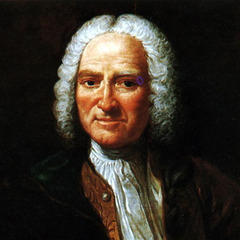
Baron d'Holbach
Baron d'Holbach

Baron d'Holbach, a German philosopher and author, was born on December 8, 1723, in France, and died on January 21, 1789. He was an influential figure of the Enlightenment era, known for his atheistic and materialist ideas. more

You May Also Like

“If the moon, in the act of completing its eternal way around the earth, were gifted with self-consciousness, it would feel thoroughly convinced that it was traveling its way of its own accord on the strength of a resolution taken once and for all. So would a Being, endowed with higher insight and more perfect intelligence, watching man and his doings, smile about man's illusion that he was acting according to his own free will.”

“I do not believe in free will. Schopenhauer's words: 'Man can do what he wants, but he cannot will what he wills,' accompany me in all situations throughout my life and reconcile me with the actions of others, even if they are rather painful to me. This awareness of the lack of free will keeps me from taking myself and my fellow men too seriously as acting and deciding individuals, and from losing my temper.”

“I should . . . prefer swallowing one incomprehensibility rather than two. It requires one effort only to admit the single incomprehensibility of matter endowed with thought, and two to believe, first that of an existence called spirit, of which we have neither evidence nor idea, and then secondly how that spirit, which has neither extension nor solidity, can put material organs into motion.”

“When a man acts in ways that annoy us we wish to think him wicked, and we refuse to face the fact that his annoying behavior is the result of antecedent causes which, if you follow them long enough, will take you beyond the moment of his birth, and therefore to events for which he cannot be held responsible by any stretch of imagination... When a motorcar fails to start, we do not attribute its annoying behavior to sin, we do not say, you are a wicked motorcar, and you shall not have any more gasoline until you go.”