Quotessence
Home / Quotes / Quote by Charles Spurgeon

Quote by Charles Spurgeon

“Watch constantly against those things which are thought to be no temptations. The most poisonous serpents are found where the sweetest flowers grow. Cleopatra was poisoned by an asp that was brought to her in a basket of fair flowers. Sharp-edged tools, long handled, wound at last.”

Quote by Charles Spurgeon

Author
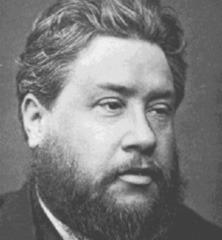
Charles Spurgeon
Charles Spurgeon

Charles Haddon Spurgeon, born on June 19, 1834, was a prominent Christian preacher from the United Kingdom. Known as the 'Preacher of London,' he was renowned for his passionate sermons and profound influence. Spurgeon's preaching drew thousands of listeners, and his writings had a widespread impact on the Christian world. more

You May Also Like

“Forging differs from hoaxing, inasmuch as in the later the deceit is intended to last for a time, and then be discovered, to the ridicule of those who have credited it; whereas the forger is one who, wishing to acquire a reputation for science, records observations which he has never made.”

“Of Cooking. This is an art of various forms, the object of which is to give ordinary observations the appearance and character of those of the highest degree of accuracy. One of its numerous processes is to make multitudes of observations, and out of these to select only those which agree, or very nearly agree. If a hundred observations are made, the cook must be very unhappy if he cannot pick out fifteen or twenty which will do for serving up.”

“About thirty years ago there was much talk that geologists ought only to observe and not theorise; and I well remember some one saying that at this rate a man might as well go into a gravel-pit and count the pebbles and describe the colours. How odd it is that anyone should not see that all observation must be for or against some view if it is to be of any service!”

“Almost all the greatest discoveries in astronomy have resulted from what we have elsewhere termed Residual Phenomena, of a qualitative or numerical kind, of such portions of the numerical or quantitative results of observation as remain outstanding and unaccounted for, after subducting and allowing for all that would result from the strict application of known principles.”

“As in Mathematicks, so in Natural Philosophy, the Investigation of difficult Things by the Method of Analysis, ought ever to precede the Method of Composition. This Analysis consists in making Experiments and Observations, and in drawing general Conclusions from them by Induction, and admitting of no Objections against the Conclusions, but such as are taken from Experiments, or other certain Truths. For Hypotheses are not to be regarded in experimental Philosophy.”