Quotessence
Home / Quotes / Quote by Lucretius

Quote by Lucretius

“At this stage you must admit that whatever is seen to be sentient is nevertheless composed of atoms that are insentient. The phenomena open to our observation so not contradict this conclusion or conflict with it. Rather they lead us by the hand and compel us to believe that the animate is born, as I maintain, of the insentient.”

Quote by Lucretius

Author
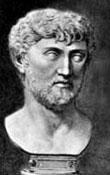
Lucretius
Lucretius

Lucretius (99 BC - 55 BC) was a renowned Greek Roman poet, hailed as the peak of Greek Roman philosophical poetry. His work 'On the Nature of Things' presented the natural philosophical ideas of the Greek philosopher Democritus in poetic form, which had a profound impact on later generations. more

You May Also Like

“But by far the greatest hindrance and aberration of the human understanding proceeds from the dullness, incompetency, and deceptions of the senses; in that things which strike the sense outweigh things which do not immediately strike it, though they be more important. Hence it is that speculation commonly ceases where sight ceases; insomuch that of things invisible there is little or no observation.”

“Common sense is science exactly in so far as it fulfills the ideal of common sense; that is, sees facts as they are, or at any rate, without the distortion of prejudice, and reasons from them in accordance with the dictates of sound judgment. And science is simply common sense at its best, that is, rigidly accurate in observation, and merciless to fallacy in logic.”

“I am convinced that this is the only means of advancing science, of clearing the mind from a confused heap of contradictory observations, that do but perplex and puzzle the Student, when he compares them, or misguide him if he gives himself up to their authority; but bringing them under one general head, can alone give rest and satisfaction to an inquisitive mind.”

“I cannot but be astonished that Sarsi should persist in trying to prove by means of witnesses something that I may see for myself at any time by means of experiment. Witnesses are examined in doutbful matters which are past and transient, not in those which are actual and present. A judge must seek by means of witnesses to determine whether Peter injured John last night, but not whether John was injured, since the judge can see that for himself.”