“It is one of those problems of human nature, which may be noted down, but not solved; - although Ralph felt no remorse at that moment for his conduct towards the innocent, true-hearted girl; although his libertine clients had done precisely what he had expected, precisely what he most wished, and precisely what would tend most to his advantage, still he hated them for doing it, from the very bottom of his soul.”
Quote by Charles Dickens
Work
The Life and Adventures of Nicholas Nickleby ... With a Frontispiece from a Painting by T. Webster
This book is a seminal work in English literature, chronicling the journey of its protagonist, Nicholas Nickleby, through various challenges and adventures. The narrative is accompanied by a frontispiece, a decorative illustration, created by the artist T. Webster. more
Author
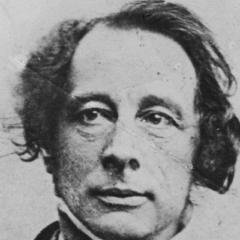
Charles Dickens
Charles Dickens, a British writer born on February 7, 1812, and died on June 9, 1870, is one of the greatest novelists of the 19th century. Known for his profound social criticism and vivid narrative style, Dickens' works extensively cover social reality, revealing various issues in the British society of the time. more
You May Also Like
Source: Delphi Complete Works of Charles Dickens (Illustrated)
“The cramped monotony of my existence grinds me away by the grain.”
Source: The Mystery of Edwin Drood
Source: Four Novels: Great Expectations, David Copperfield, A Tale of Two Cities, and Hard Times
Source: Delphi Complete Works of Charles Dickens (Illustrated)
Source: The Life and Adventures of Nicholas Nickleby ... With a Frontispiece from a Painting by T. Webster
Source: The Works of Charles Dickens
Source: Our Mutual Friend
Source: Charles Dickens's works. Charles Dickens ed. [18 vols. of a 21 vol. set. Wanting A child's history of England; Christmas stories; The mystery of Edwin Drood].
Source: Charles Dickens's works. Charles Dickens ed. [18 vols. of a 21 vol. set. Wanting A child's history of England; Christmas stories; The mystery of Edwin Drood].
Source: Charles Dickens's works. Charles Dickens ed. [18 vols. of a 21 vol. set. Wanting A child's history of England; Christmas stories; The mystery of Edwin Drood].