Quotessence
Home / Quotes / Quote by Richard LaGravenese

Quote by Richard LaGravenese

“I tend to believe, when you're in a relationship, if you don't fight, it's not a real relationship. You have to have arguments and tensions, otherwise I don't believe it. My mother always said, "If you don't fight, you can't have a marriage. You have to fight for each other. If you don't know how to fight, relationships tend not to last."”

Quote by Richard LaGravenese

Author
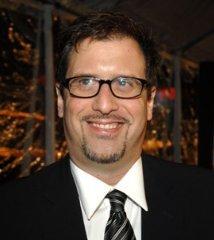
Richard LaGravenese
Richard LaGravenese

Richard LaGravenese, born on October 30, 1959, is a renowned screenwriter in the United States. His works span both film and television, known for their profound character development and engaging storytelling. more

You May Also Like

“You want to have the experience. As far as the creative side, the more I do this, the more I know that it's all about the writing. You got on a film sometimes and it's sort of half-written, and they expect and think that the actor's job is to bring the extra part and the good part. It's not. We're good at saying what other people have written, but for the majority of it, that's about it, comedians aside. It's all in the writing. Whether that's dialogue or character, or whatever, it doesn't matter. As long as they've done something special, than you can do something special.”

“My introduction into making records was through a sampler, and that's what I did for a long time. And through doing that over a period of time and kind of coming out of it, I've realized that one of the reasons it works so well for me, one of the reasons psychologically I took to the process so well, was because I'm a problem-solver by nature. If you stick me in a void, I don't do so hot. As soon as there's one little thing to spark an idea, and then I have something to bounce off of - then I'm all right. But until I have that, like in that void, it's kind of hard.”

“The fun part, I will admit this much, there is a period when listening to my music is fun, and that's when I'm making it. There's a tiny little window before something gets old, but after it's come to fruition. There's a little window there where I can listen to a song probably about five times, and I'll really think it's awesome. That's kind of the period that lets me know when I - 99 percent of the time, that period is right about whether a song is going to be a keeper for an album or just a throwaway track that never gets - in that little window.”

“Some cultures don't have a separate word for music and dance. To my knowledge, this notion of listening to music without dancing is a Western creation. I can't think of any artist that I love that doesn't inspire movement in some form or another. I guess Tangerine Dream or early Vangelis or something like that, you're not really going to dance. But on the whole, I feel like dancing and music are so naturally intertwined. I feel like subconsciously, that's the goal whenever I'm working on music. It's kind of the defining thing: Does it got some funk to it, basically?”

“Audiences are very sophisticated and they know the nuts and bolts of the genre - certainly with horror more than others I think. But they attract lots of people, they're much derided as a genre but people go and see them and they're not all dumb. There's some very clever horror films. Stephen King gets a lot of flack for not being a proper writer because he's a horror writer, but I think he writes some brilliant books. I think it's wrong to just bin it before looking at it.”

“Live theatre is great. I loved doing the League live because you get that element of spontaneity, but then when I'm doing live I start to crave the precision of filming. It's a different discipline; it's like a scalpel and you're very precise suddenly. It's scary as well because you think this is it, this is my one go at making it if I can the best it can be, because this is how it's going to be remembered and rendered and left on this film indelibly. And people are going to look back on this and that's that.”

“But live you get the chance every night to rework it and change it and hone it. But then you get the false, weird oddness of being able to look at it and say: "Well that's weird, because last night they laughed at that and yet they didn't tonight. So what did I do? Nothing was different." You have that strange thing of being able to tell within five minutes what an audience is like. Very quickly an audience gets a personality and you start to think: "What is it about you all; you all hate it, don't you?" Then you come out and have friends in and they say: "It was brilliant!"”

“It's such hard work doing a musical. I did my first musical last year, performing in The Producers, and it was a big part to suddenly be doing Leo Bloom in that. It's such hard work. It's a proper slog. It became like clocking in. And it's a big factory - you go in, everyone's got their little plot, people are taking in and out of it if they have days off or holidays, and it's just a jigsaw that all works. It always amazes me that this product would happen every night and it was just all these elements coming together in a big machine.”

“There's even more blending of genres happening. They blend sci-fi with action, or family drama with a mystery show. People don't want to just do the same thing that everybody's done a thousand times before, and that's probably a big part of it. I think you're also seeing television and features speak to each other. You see it happen in movies, and it starts to get reflected on the small screen.”

“My wife and I have now founded Lavender Pictures. If one has one's own company, there are very few surprises, but there's still the actual thrill of trying to get these projects off the ground. We're meeting with some measure of success. Always, now and at any stage of my career, I'm open to ambush, but there have been the most extraordinary set of coincidences, which continues through my journey, and I find it thrilling. Often, out of left field and quite randomly, comes a project and I think, "My god, there you are!" It's quite beautiful, really.”