Quotessence
Home / Quotes / Quote by Algernon Sidney

Quote by Algernon Sidney

Author

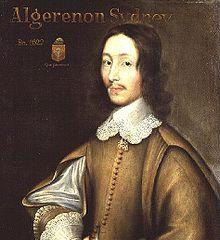
Algernon Sidney
Algernon Sidney

Algernon Sidney was an English politician born on January 15, 1623, and died on December 7, 1683. He was known as a political theorist and revolutionary, whose ideas had a significant impact on the evolution of the British political system. more

You May Also Like

“The timing & characteristics of state intervention affect not only organizational tactics and strategies, but the content and definition of interest itself... Some scholars have directly stressed that state interventions create corporatist forms... the formation, let alone the political capabilities, of such purely socioeconomic phenomena as interest groups and classes depends in significant measure on the structures and activities of the very states the social actors, in turn, seek to influence.”

“The chief arguments that are urged against an established religion, may be used with equal force against an established charity. The dissenter submits, that no party has a right to compel him to contribute to the support of doctrines, which do not meet his approbation. The rate-payer may as reasonably argue, that no one is justified in forcing him to subscribe towards the maintenance of persons, whom he does not consider deserving of relief.”

“Why, when the economist gives advice to his society, is he so often cooly ignored? He never ceases to preach free trade, and protectionism is growing in the United States. He deplores the perverse effects of minimum wage laws, and the legal minimum is regularly raised each 3 or 5 years. He brands usury laws as a medieval superstition, but no state hurries to repeal its law.”

“The real economic cleavage is not... between employers and employed, but between all who do constructive work, from scientist to laborer, on the one hand, and all whose main interest is the preservation of existing proprietary rights upon the other, irrespective of whether they contribute to constructive work or not.”

“Government should be good for the liberty of the governed, and that is when it governs to the least possible degree. It should be good for the wealth of the nation, and that is when it acts as little as possible upon the labor that produces it and when it consumes as little as possible. It should be good for the public security, and that is when it protects as much as possible, provided that the protection does not cost more than it brings in.... It is in losing their powers of action that governments improve. Each time that the governed gain space there is progress.”

“Greediness consists in ravishing the goods of another through violence or cunning, as in the two noble professions of the conqueror and courtier. But the merchant, like all other industrious men, seeks his benefit only in his talent, in virtue of freely arrived at agreements, and appealing to faith and the laws.”