Quotessence
Home / Quotes / Quote by John Cassian

Quote by John Cassian

“We must, with God's help, eradicate the deadly poison of the demon of anger from the depths of our souls. So long as he dwells in our hearts and blinds the eyes of the heart with his somber disorders, we can neither discriminate what is for our good, nor achieve spiritual knowledge, nor fulfill our good intentions, nor participate in true life; and our intellect will remain impervious to the contemplation of the true, divine light; for it is written, 'Man's anger does not bring about the righteousness of God' (Jms. 1:20).”

Quote by John Cassian

Author
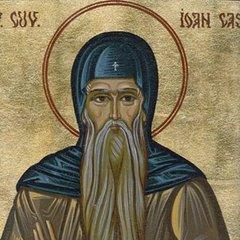
John Cassian
John Cassian

John Cassian (360-435 AD) was a prominent figure in early Christian history, known for his contributions to monasticism and theological thought. He spent his life primarily in Egypt, where he founded one of the first monasteries and became its abbot. Cassian is renowned for his deep understanding of monastic life and his influential writings on Christian doctrine. more

You May Also Like

“Our Lord reserved to Himself certain things which He would do in due time in a manner outside the course and order of nature, so that they would wonder and be astonished at seeing not great but unusual things, who are unmoved by things daily seen. For the government of the world is a greater miracle than feeding five thousand men from five loaves; yet at the former no one wonders, the latter astonishes all men: not as a greater wonder, but as a rarer.”

“In this we see the wondrous virtue of the Lord: that the power dwelling in His body should communicate to perishable things the efficacy to heal, and that the divine activity should issue forth even from the hem of His garment. For God is not perceptible by the senses, to be enclosed within a body. The assumption of a body did not limit the nature of His power; but for our redemption His power took upon it the frailty of our body.”

“Let us quake before the great Spirit, Who is my God, Who has made me know God, Who is God there above, and Who forms God here: almighty, imparting manifold gifts, Him Whom the holy choir hymns, Who brings life to those in heaven and on earth, and is enthroned on high, coming from the Father, the divine force, self-commandeered; He is not a Child (for there is one worthy Child of the One who is best), nor is He outside the unseen Godhead, but of identical honor.”

“Man is more himself, man is more manlike, when Joy is the fundamental thing in him, and Grief the superficial. Melancholy should be an innocent interlude, a tender and fugitive state of mind; Praise should be the permanent pulsation of the soul. Pessimism is at best an emotional half-holiday; Joy is the uproarious labor by which all things live? Christianity satisfies suddenly and perfectly man's ancestral instinct for being the right way up; satisfies it supremely in this, that by its creed Joy becomes something gigantic, and Sadness something special and small.”