“Vulgar and inactive minds confound familiarity with knowledge, and conceive themselves informed of the whole nature of things, when they are shown their form or told their use.”
Quote by Samuel Johnson
Work
The Rambler: A Periodical Paper, Published in 1750, 1751, 1752
The Rambler is a series of periodical papers that were published in three separate volumes, spanning the years 1750, 1751, and 1752. Each volume consists of a variety of essays and articles, covering a range of topics including social issues, literature, and philosophy. The work is notable for its contribution to the development of the essay form and its influence on subsequent literary works. more
Author
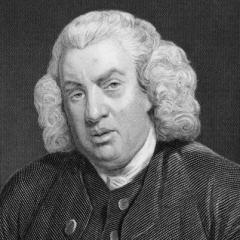
Samuel Johnson
Samuel Johnson was an English writer, poet, and lexicographer, renowned for his comprehensive English dictionary, 'A Dictionary of the English Language', published in 1755. His distinctive writing style and wit have cemented his place as a significant figure in the history of English literature. more
You May Also Like
Source: The Works of Samuel Johnson, LL. D.: With an Essay on His Life and Genius /c by Arthur Murphy, Esq
Source: The Works of Samuel Johnson: LL.D. A New Edition in Twelve Volumes. With an Essay on His Life and Genius, by Arthur Murphy, Esq
Source: The Rambler
Source: The Rambler: A Periodical Paper, Published in 1750, 1751, 1752
Source: The Rambler: In Four Volumes..
Source: The Works of Samuel Johnson...
“Know that the thing that is easiest to do is rarely the thing that is best to do.”
“For God hates utterly the bray of bragging tongues.”
Source: The Antigone of Sophocles: An English Version by Dudley Fitts and Robert Fitzgerald
“Few moments in life are more gratifying than those when the arrogant are exposed as the ignorant.”