Quotessence
Home / Quotes / Quote by Gregor Mendel

Quote by Gregor Mendel

Work

Gregor Mendel's Experiments on Plant Hybrids: A Guided Study

Gregor Mendel's Experiments on Plant Hybrids: A Guided Study is a scholarly work that delves into the historical context and methodology of Mendel's research. It aims to help readers understand the significance of Mendel's work in the development of modern genetics, offering insights into the experimental design and results of his studies on plant hybridization. more

Author
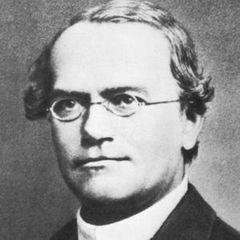
Gregor Mendel
Gregor Mendel

Gregor Mendel, born on July 20, 1822, and died on January 6, 1884, was a renowned scientist. He is hailed as the founder of modern genetics, having proposed the concept of genetic factors through his experiments with pea hybridization, laying the foundation for the development of genetics. more

You May Also Like

“My experiments with single traits all lead to the same result: that from the seeds of hybrids, plants are obtained half of which in turn carry the hybrid trait (Aa), the other half, however, receive the parental traits A and a in equal amounts. Thus, on the average, among four plants two have the hybrid trait Aa, one the parental trait A, and the other the parental trait a. Therefore, 2Aa+ A +a or A + 2Aa + a is the empirical simple series for two differing traits.”

“The three of us have worked on the development of the small and totally harmless fruit fly, Drosophila. This animal has been extremely cooperative in our hands - and has revealed to us some of its innermost secrets and tricks for developing from a single celled egg to a complex living being of great beauty and harmony. ... None of us expected that our work would be so successful or that our findings would ever have relevance to medicine.”

“We are now witnessing, after the slow fermentation of fifty years, a concentration of technical power aimed at the essential determinants of heredity, development and disease. This concentration is made possible by the common function of nucleic acids as the molecular midwife of all reproductive particles. Indeed it is the nucleic acids which, in spite of their chemical obscurity, are giving to biology a unity which has so far been lacking, a chemical unity.”

“When two plants, constantly different in one or several traits, are crossed, the traits they have in common are transmitted unchanged to the hybrids and their progeny, as numerous experiments have proven; a pair of differing traits, on the other hand, are united in the hybrid to form a new trait, which usually is subject to changes in the hybrids' progeny.”