“The Sabians were allowed to build a new Temple of the Moon God, and to continue their religious rites, after the Arab General Ibn Ghanam conquered Harran in the seventh century AD. This in itself is a sign of most unusual favor, since Islamic armies normally offered "pagans" the choice of either conversion or death. Even more interesting, however, is the Sabians' encounter with the Abbasid Caliph Abu Jafar Abdullah al-Ma'mun, who passed through their city in AD 830 and reportedly quizzed them intensively on their religion. Remembering the Sabian pilgrimages to Giza, it is reasonable to wonder whether there is any connection with the fact that in AD 820, a decade before he visited Harran, it was Ma'mun who tunnelled into the Great Pyramid and opened its previously hidden passageways and chambers. Indeed, it is through "Ma'mun's Hole" that visitors still enter the monument today. Described by Gibbon as "a prince of rare learning," it seems Ma'mun's investigation was prompted by information he'd received about the Great Pyramid, specifically that it contained: 'a secret chamber with maps and tables of the celestial and terrestrial spheres. Although they were said to have been made in the remote past, they were suppposed to be of great accuracy.”
Quote by Graham Hancock
Work
Magicians of the Gods: The Forgotten Wisdom of Earth's Lost Civilization
Browse quotes and source details for this work. more
Author
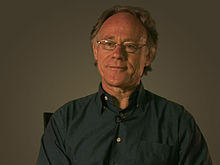
Graham Hancock
Graham Hancock is a British writer known for his research into ancient civilizations and mysterious phenomena. His works delve into the mysteries of human history and culture, including ancient Egypt, the Maya, and Atlantis. more
You May Also Like
“Gay Sex Three, Straight Sex Nil”
Source: Shattered Glass
“We need to choose to continue to learn, grow, and empower people to learn and grow as well.”
Source: Digital Fit: Manifest Future of Business with Multidimensional Fit
Source: Enchanted Air: Two Cultures, Two Wings
Source: The Imitation of Christ
“Just cuz you get to the end doesn’t mean you know what happened.”
Source: Tropic of Orange
“What if . . . What if I am stupid? Like people say?”
Source: Brave