“I have sometimes thought that the mere hearing of those songs would do more to impress some minds with the horrible character of slavery, than the reading of whole volumes of philosophy on the subject could do. I did not, when a slave, understand the deep meaning of those rude and apparently incoherent songs. I was myself within the circle; so that I neither saw nor heard as those without might see and hear. They told a tale of woe which was then altogether beyond my feeble comprehension; they were tones loud, long, and deep; they breathed the prayer and complaint of souls boiling over with bitterest anguish. Every tone was a testimony against slavery, and a prayer to God for deliverance from chains. The hearing of those wild notes always depressed my spirit, and filled me with ineffable sadness. I have frequently found myself in tears while hearing them. The mere recurrence to those songs, even now, afflicts me; and while I am writing these lines, an expression of feeling has already found its way down my cheek. To those songs I trace my first glimmering conception of the dehumanizing character of slavery. I can never get rid of that conception. Those songs still follow me, to deepen my hatred of slavery, and quicken my sympathies for my brethren in bonds. If any one wishes to be impressed with the soul-killing effects of slavery, let him go to Colonel Lloyd's plantation, and, on allowance-day, place himself in the deep pine woods, and there let him, in silence, analyze the sounds that shall pass through the chambers of his soul, - and if he is not thus impressed, it will only be because "there is no flesh in his obdurate heart." I have often been utterly astonished, since I came to the north, to find persons who could speak of the singing, among slaves, as evidence of their contentment and happiness. It is impossible to conceive of a greater mistake. Slaves sing most when they are most unhappy. The songs of the slave represent the sorrows of his heart; and he is relieved by them, only as an aching heart is relieved by its tears. At least, such is my experience. I have often sung to drown my sorrow, but seldom to express my happiness. Crying for joy, and singing for joy, were alike uncommon to me while in the jaws of slavery. The singing of a man cast away upon a desolate island might be as appropriately considered as evidence of contentment and happiness, as the singing of a slave; the songs of the one and of the other are prompted by the same emotion.”
Quote by Frederick Douglass
Work
This seminal work provides a first-hand account of the hardships and triumphs of Frederick Douglass, a former slave who rose to prominence in the fight against slavery. The narrative covers his early years in bondage, his escape to freedom, and his subsequent journey to becoming a leading figure in the abolitionist movement. more
Author
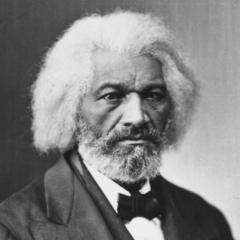
Frederick Douglass was a renowned orator and writer, born into a slave family in Maryland, USA. He gained his freedom in the mid-19th century through self-education and became one of the leaders of the abolitionist movement. Douglass made significant contributions to the cause of equality and justice in the United States through his incisive speeches and writings, which exposed the cruelty of slavery and inspired countless people to join the abolitionist movement. more
You May Also Like
“There is no greater sorrow than to recall in misery the time when we were happy.”
“Failure is not the absence of ability. It is the decision to wait for certainty instead of acting.”
“i'm sorry if i wasn't the daughter you had in mind -i only ever wanted to make you proud-”
“I try to smile at her, but I can't extend my flexibility training to my mouth, it just won't move.”