Quotessence
Home / Quotes / Quote by Aleister Crowley

Quote by Aleister Crowley

“Every individual has some qualities that endear him to some other. And per contra, I doubt if there is any class which is not detestable to some other class. Artists, police, the clergy, "reds," foxhunters, Freemasons, Jews, "heaven-born," women's clubwomen (especially in U.S.A.), "Methodys," golfers, dog-lovers; you can't find one body without its "natural" enemies. It's right, what's worse; every class, as a class, is almost sure to have more defects than qualities. As soon as you put men together, they somehow sink, corporatively, below the level of the worst of the individuals composing it. Collect scholars on a club committee, or men of science on a jury; all their virtues vanish, and their vices pop out, reinforced by the self-confidence which the power of numbers is bound to bestow.”

Quote by Aleister Crowley

Work

Magick Without Tears

Browse quotes and source details for this work. more

Author
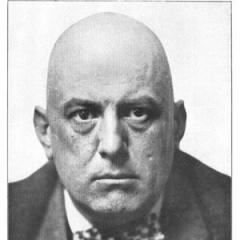
Aleister Crowley
Aleister Crowley

Aleister Crowley, a British poet, mystic, and writer, was born on October 12, 1875, and died on December 1, 1947. He is known for his poetic works and mystical practices, and is considered one of the most controversial figures of the 20th century. more

You May Also Like

“In my opinion the basic cause for the relative failure of the two greatest revolutions in history resides not, to borrow again from Voline, in "historic inevitability," or simply in the subjective "errors" of revolutionary actors. The revolution bears within itself a serious contradiction (a contradiction which fortunately—and we will return to the subject —is not irremediable and is attenuated with time): it can only arise, it can only vanquish if it issues from the depths of the popular masses, from their irresistible spontaneous uprising; but although the class instinct drives the popular masses to break their chains, they are yet lacking in education and consciousness. And since, in their formidable but tumultuous and blind drive towards liberty, they run up against privileged, conscious, educated, organized, and tested social classes, they can only vanquish the resistance they meet if they succeed in obtaining in the heat of the struggle, the consciousness, the science, the organization, and the experience they lack. But the very fact of forging the weapons I have just listed summarily, and which alone can ensure their superiority over the enemy, bears an immense peril within it: that of killing the spontaneity that is the very spirit of the revolution; that of compromising freedom through organization; that of allowing the movement to be confiscated by an elite minority of more educated, more conscious, more experienced militants who, to begin with, offer themselves as guides in order, in the end, to impose themselves as chiefs and to subject the masses to new forms of the oppression of man by man.”

“They imagine that their poverty is transitory, and that they only need a stroke of good luck to transform them into capitalists. Education, they think, is the lucky number in the social lottery, and it will bring them the grand prize. They do not perceive that this ticket given them by the capitalist class is a fraud, that labor, whether manual or intellectual, has no other chance than to earn its daily pittance, that it has nothing to hope for but to be exploited, and that the more capitalism goes on developing, the more do the chances of an individual raising himself out of his class go on diminishing.”

“The psychology of the naturalistic drama, in which the characters are interpreted as social phenomena, has its origin in this urge which the spectator feels to identify himself with his social compeers. Now, however much objective truth there may be in such an interpretation of the characters in a play, it leads, when raised to the status of an exclusive principle, to a falsification of the facts. The assumption that men and women are merely social beings results in just as arbitrary a picture of experience as the view according to which every person is a unique and incomparable individual. Both conceptions lead to a stylization and romanticizing of reality. On the other hand, however, there is no doubt that the conception of man held in any particular epoch is socially conditioned and that the choice as to whether man is portrayed in the main as an autonomous personality or as the representative of a class depends in every age on the social approach and political aims of those who happen to be the upholders of culture. When a public wishes to see social origins and class characteristics emphasized in the human portraiture, that is always a sign that that society has become class-conscious, no matter whether the public in question is aristocratic or middle-class. In this context the question whether the aristocrat is only an aristocrat and the bourgeois only a bourgeois is absolutely unimportant.”

“I am not speaking here of the theory of the class struggle — I am speaking of the fact as the workers know it. Hundreds and thousands of workers are class-conscious without ever having heard of Marx and without coming in contact with the doctrine as such. They are class-conscious because their struggles for existence and their desire to escape from oppression and monotony, find constant opposition.”

“Guitars (except when played in "classical"—that is, archaic—style) are low [status] by nature, and that is why they were so often employed as tools of intentional class degradation by young people in the 1960s and '70s. The guitar was the perfect instrument for the purpose of signaling these young people's flight from the upper-middle and middle classes, associated as it is with Gypsies, cowhands, and other personnel without inherited or often even earned money and without fixed residence.”