“Without justice being freely, fully, and impartially administered, neither our persons, nor our rights, nor our property, can be protected. And if these, or either of them, are regulated by no certain laws, and are subject to no certain principles, and are held by no certain tenure, and are redressed, when violated, by no certain remedies, society fails of all its value; and men may as well return to a state of savage and barbarous independence.”
Quote by Joseph Story
Work
Commentaries on the Constitution of the United States: With a Preliminary Review of the Constitutional History of the Colonies and States Before the Adoption of the Constitution
This book provides an in-depth examination of the United States Constitution, offering a detailed analysis of its origins and the historical background of the colonies and states that led to its creation. It is a comprehensive scholarly work that delves into the constitutional history of the United States. more
Author
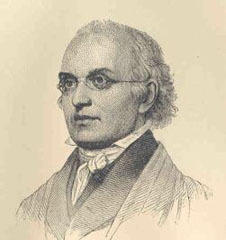
Joseph Story
Joseph Story was a distinguished figure in the early history of the United States. He served as an Associate Justice of the Supreme Court of the United States from 1812 to 1845. His contributions to American law and legal thought were significant, and he is remembered for his influential writings on constitutional law and his role in shaping the early decisions of the Supreme Court. more
You May Also Like
Source: The Real Thomas Jefferson
Source: The Federalist on the New Constitution, Written in the Year 1788, with an Appendix Containing the Letters of Pacificus and Helvidius on the Proclamation of Neutrality of 1793
Source: The Federalist
Source: The Fœderalist: A Collection of Essays, Written in Favor of the New Constitution, as Agreed Upon by the Fœderal Convention, September 17, 1787. Reprinted from the Original Text. With an Historical Introduction and Notes
Source: The Fœderalist: A Collection of Essays, Written in Favor of the New Constitution, as Agreed Upon by the Fœderal Convention, September 17, 1787. Reprinted from the Original Text. With an Historical Introduction and Notes
Source: The Essential Federalist: A New Reading of the Federalist Papers
Source: The Essential Federalist: A New Reading of the Federalist Papers
Source: The Federalist, on the New Constitution, Written in 1788