Quotessence
Home / Quotes / Quote by Brooks Atkinson

Quote by Brooks Atkinson

“The humorous man recognizes that absolute purity, absolute justice, absolute logic and perfection are beyond human achievement and that men have been able to live happily for thousands of years in a state of genial frailty.”

Quote by Brooks Atkinson

Work

Once Around the Sun

Once Around the Sun is a narrative that takes readers on a transformative journey, encapsulating the cyclical nature of life and the interconnectedness of human experiences. The story unfolds over the course of a year, reflecting on the changes and insights that accumulate with the turning of the seasons. It invites readers to contemplate the nature of existence, the pursuit of meaning, and the search for deeper connections with oneself and others. more

Author

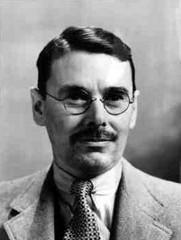
Brooks Atkinson
Brooks Atkinson

Brooks Atkinson was a renowned American theater critic, known for his profound insights and distinctive reviews that had a significant impact on the development of American theater in the 20th century. more

You May Also Like

“If you expect perfection from people your whole life is a series of disappointments, grumblings and complaints. If, on the contrary, you pitch your expectations low, taking folks as the inefficient creatures which they are, you are frequently surprised by having them perform better than you had hoped.”

“A great deal of the joy of life consists in doing perfectly, or at least to the best of one's ability, everything which one attempts to do. There is a sense of satisfaction, a pride in surveying such a work, a work which is rounded, full, exact, complete in all its parts-which the superficial man, who leaves his work in a slovenly, slipshod, half-finished condition can never know. It is this conscientious completeness which turns work into art. The smallest thing, well done, becomes artistic.”

“...there ought to exist the fullest liberty of professing and discussing, as a matter of ethical conviction, any doctrine, however immoral it may be considered.”

“The death penalty fulfills a preventive function, but it is also very clearly a form of revenge. It is an especially severe form of punishment because it is so final. The human life is ended and the executed person is deprived of the opportunity to change, to restore the harm done or compensate for it.”