Quotessence
Home / Quotes / Quote by Johann Wolfgang von Goethe

Quote by Johann Wolfgang von Goethe

Work

Delphi Works of Johann Wolfgang von Goethe (Illustrated)

The book features a curated selection of Goethe's most celebrated poems, plays, and essays, showcasing his profound influence on German literature and philosophy. The illustrated edition adds a visual dimension to the text, enhancing the reader's engagement with Goethe's timeless works. more

Author
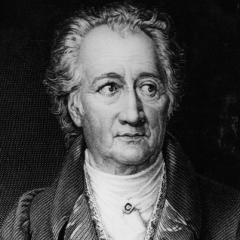
Johann Wolfgang von Goethe

Johann Wolfgang von Goethe, born on August 28, 1749, and died on March 22, 1832, was a prominent German writer, thinker, and scientist. He is one of the greatest writers in German literary history and his works have had a profound impact on the world. His most famous works include 'Faust' and 'The Sorrows of Young Werther'. more

You May Also Like

“A religious phenomenon will only be recognized as such if it is grasped at its own level, that is to say, if it is studied as something religious. To try to grasp the essence of such phenomenon by means of physiology, psychology, sociology, economics, linguistics, art or any other study is false; it misses the one unique and irreducible element in it - the element of the sacred.”

“The history of religions reaches down and makes contact with that which is essentially human: the relation of man to the sacred. The history of religions can play an extremely important role in the crisis we are living through. The crises of modern man are to a large extent religious ones, insofar as they are an awakening of his awareness to an absence of meaning.”

“When the sacred manifests itself in any hierophany, there is not only a break in the homogeneity of space; there is also a revelation of an absolute reality, opposed to the nonreality of the vast surrounding expanse. The manifestation of the sacred ontologically founds the world. In the homogenous and infinite expanse, in which no point of reference is possible and hence no orientation can be established, the hierophany reveals an absolute fixed point, a center.”