Quotessence
Home / Quotes / Quote by John D. Rockefeller

Quote by John D. Rockefeller

Author

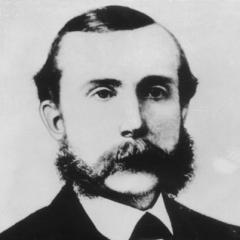
John D. Rockefeller
John D. Rockefeller

John D. Rockefeller, born on July 8, 1839, and died on May 23, 1937, was one of the most famous industrialists and philanthropists in American history. He was renowned for his immense influence in the oil industry. Rockefeller founded Standard Oil, which later became one of the largest oil companies in the world. His business strategies and philanthropic endeavors had a profound impact on the economic and social development of the United States in the 20th century. more

You May Also Like

“Science has a culture that is inherently cautious and that is normally not a bad thing. You could even say conservative, because of the peer review process and because the scientific method prizes uncertainty and penalises anyone who goes out on any sort of a limb that is not held in place by abundant and well-documented evidence.”

“Samsara-the Wheel of Existence, literally, the "Perpetual Wandering"-is the name by which is designated the sea of life ever restlessly heaving up and down, the symbol of this continuous process of ever again and again being born, growing old, suffering, and dying. (It) is constantly changing from moment to moment, (as lives) follow continuously one upon the other through inconceivable periods of time. Of this Samsara, a single lifetime constitutes only a vanishingly tiny fraction.”

“For, owners of their deeds (karma) are the beings, heirs of their deeds; their deeds are the womb from which they sprang; with their deeds they are bound up; their deeds are their refuge. Whatever deeds they do-good or evil-of such they will be the heirs. And wherever the beings spring into existence, there their deeds will ripen; and wherever their deeds ripen, there they will earn the fruits of those deeds, be it in this life, or be it in the next life, or be it in any other future life.”

“Surely if living creatures saw the results of all their evil deeds, they would turn away from them in disgust. But selfhood blinds them, and they cling to their obnoxious desires. They crave pleasure for themselves and they cause pain to others; when death destroys their individuality, they find no peace; their thirst for existence abides and their selfhood reappears in new births. Thus they continue to move in the coil and can find no escape from the hell of their own making.”