Quotessence
Home / Quotes / Quote by F. Scott Fitzgerald

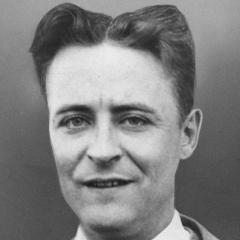
Quote by F. Scott Fitzgerald

“I've given parties that have made Indian rajahs green with envy. I've had prima donnas break $10,000 engagements to come to my smallest dinners. When you were still playing button back in Ohio, I entertained on a cruising trip that was so much fun that I had to sink my yacht to make my guests go home.”

Quote by F. Scott Fitzgerald

Work

The Crack-up

A compilation of personal reflections and narratives that delve into the depths of human emotion, particularly focusing on the author's own experiences with mental breakdown and the broader implications of societal and personal turmoil. more

Author

F. Scott Fitzgerald
F. Scott Fitzgerald

F. Scott Fitzgerald was an American author of novels and short stories, renowned for his works that encapsulate the Jazz Age and the Roaring Twenties. His most celebrated novel, 'The Great Gatsby,' is a critical and commercial success, reflecting the themes of the American Dream and the decline of the American upper class. more

You May Also Like

“Looking back over a decade one sees the ideal of a university become a myth, a vision, a meadow lark among the smoke stacks. Yet perhaps it is there at Princeton, only more elusive than under the skies of the Prussian Rhineland or Oxfordshire; or perhaps some men come upon it suddenly and possess it, while others wander forever outside. Even these seek in vain through middle age for any corner of the republic that preserves so much of what is fair, gracious, charming and honorable in American life.”

“Of all natural forces, vitality is the incommunicable one. . . . Vitality never "takes." You have it or you haven't it, like health or brown eyes or a baritone voice.”

“Once one is caught up into the material world not one person in ten thousand finds the time to form literary taste, to examine the validity of philosophic concepts for himself, or to form what, for lack of a better phrase, I might call the wise and tragic sense of life.”

“The purpose of a work of fiction is to appeal to the lingering after-effects in the reader's mind as differing from, say, the purpose of oratory or philosophy which respectively leave people in a fighting or thoughtful mood.”

“Many a man has risen to eminence under the powerful reaction of his mind in fierce counter-agency to the scorn of the unworthy, daily evoked by his personal defects, who with a handsome person would have sunk into the luxury of a careless life under the tranquillizing smiles of continual admiration.”

“It is an impressive truth that sometimes in the very lowest forms of duty, less than which would rank a man as a villain, there is, nevertheless the sublimest ascent of self-sacrifice. To do less would class you as an object of eternal scorn, to do so much presumes the grandeur of heroism.”