Quotessence
Home / Quotes / Quote by Terence

Quote by Terence

Work

Terence's Comedies: Translated Into English Prose, as Near as the Propriety of the Two Languages Will Admit; Together with the Original Latin from the Best Editions ... with Notes Pointing Out the Connexion of the Several Scenes, and an Index Critical and Phraseological ...

Terence's Comedies offers a comprehensive translation of the ancient Roman playwright's works, providing readers with both the English prose and the original Latin text. The inclusion of detailed notes helps to elucidate the relationships between scenes, offering a deeper understanding of the plays. The book is further enhanced by a critical and phraseological index, which aids in the study and analysis of Terence's comedies. more

Author
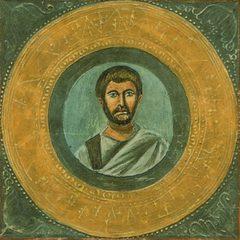
Terence
Terence

Terence, born in 186 BC and died in 159 BC, was a renowned playwright of the Roman Republic period. His works are known for their elegant language and profound moral insights, which have had a profound impact on the development of drama throughout history. more

You May Also Like

“If America is destroyed, it may be by Americans who salute the flag, sing the national anthem, march in patriotic parades, cheer Fourth of July speakers - normally good Americans, but Americans who fail to comprehend what is required to keep our country strong and free, Americans who have been lulled away into a false security.”

“The best results in the operation of a government wherein every citizen has a share largely depend upon a proper limitation of the purely partisan zeal and effort and a correct appreciation of the time when the heat of the partisan should be merged in the patriotism of the citizen. ... At this hour the animosities of political strife, the bitterness of partisan defeat, and the exultation of partisan triumph should be supplanted by an ungrudging acquiescence in the popular will and a sober, conscientious concern for the general weal. ... Public extravagance begets extravagance among the people.”

“I discharge every person under punishment or prosecution under the Sedition Law, because I considered, and now consider, that law to be a nullity as absolute and palpable as if Congress had ordered us to fall down and worship a golden image.”

“The patriot, like the Christian, must learn to bear revilings and persecutions as a part of his duty; and in proportion as the trial is severe, firmness under it becomes more requisite and praiseworthy. It requires, indeed, self-command. But that will be fortified in proportion as the calls for its exercise are repeated.”

“[A]ll power is originally vested in, and consequently derived from, the people. That government is instituted and ought to be exercised for the benefit of the people; which consists in the enjoyment of life and liberty and the right of acquiring property, and generally of pursuing and obtaining happiness and safety. That the people have an indubitable, unalienable, and indefeasible right to reform or change their government whenever it be found adverse or inadequate to the purpose of its institution.”

“[T]he delegation of the government, in [a republic], to a small number of citizens elected by the rest . . . [is] to refine and enlarge the public views by passing them through the medium of a chosen body of citizens, whose wisdom may best discern the true interest of their country and whose patriotism and love of justice will be least likely to sacrifice it to temporary or partial considerations.”