“I know with certainty, that [an honest man] is not to put his hand into the fire, and hold it there, till it be consumed: And thisevent, I think I can foretell with the same assurance, as that, if he throw himself out at the window, and meet with no obstruction, he will not remain a moment suspended in the air.”
Quote by David Hume
Work
An Enquiry Concerning the Human Understanding: And An Enquiry Concerning the Principles of Morals
This book delves into the nature of human understanding and the foundations of moral philosophy, offering insights into the workings of the human mind and ethical considerations. more
Author
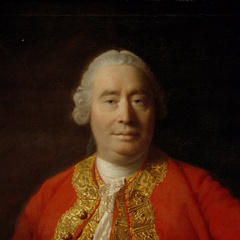
David Hume
David Hume, born on May 7, 1711, in Edinburgh, Scotland, and died on August 25, 1776, was an outstanding philosopher, historian, and economist. Known for his contributions to empiricism and skepticism, his works have had a profound impact on subsequent philosophy, economics, and psychology. more
You May Also Like
Source: A Dissertation on the Passions: The Natural History of Religion : a Critical Edition
Source: Essays and Treatises on Several Subjects
Source: Essays Moral, Political, and Literary
Source: A Treatise of Human Nature
Source: The Philosophical Works of David Hume ... Containing Dialogues Concerning Natural Religion, Essays on the Immortality of the Soul, Suicide ... &c. A New Edition
Source: Delphi Complete Works of David Hume (Illustrated)
Source: A Treatise of Human Nature: Top Philosophy Collections
Source: A Treatise of Human Nature: Revision of Great Book
Source: A Treatise of Human Nature