“Nothing more powerfully excites any affection than to conceal some part of its object, by throwing it into a kind of shade, whichat the same time that it shows enough to prepossess us in favour of the object, leaves still some work for the imagination.”
Quote by David Hume
Work
A Dissertation on the Passions: The Natural History of Religion : a Critical Edition
This critical edition of 'A Dissertation on the Passions: The Natural History of Religion' offers a scholarly examination of the complex interplay between human emotions and religious beliefs. The work explores the origins, expressions, and effects of religious passions, providing insights into the historical and philosophical underpinnings of religious phenomena. It is a comprehensive study that combines historical analysis with philosophical inquiry, aiming to shed light on the role of religion in shaping human societies. more
Author
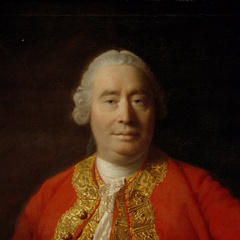
David Hume
David Hume, born on May 7, 1711, in Edinburgh, Scotland, and died on August 25, 1776, was an outstanding philosopher, historian, and economist. Known for his contributions to empiricism and skepticism, his works have had a profound impact on subsequent philosophy, economics, and psychology. more
You May Also Like
Source: Essays and Treatises on Several Subjects
Source: Essays Moral, Political, and Literary
Source: A Treatise of Human Nature
Source: The Philosophical Works of David Hume ... Containing Dialogues Concerning Natural Religion, Essays on the Immortality of the Soul, Suicide ... &c. A New Edition
Source: Delphi Complete Works of David Hume (Illustrated)
Source: A Treatise of Human Nature: Top Philosophy Collections
Source: A Treatise of Human Nature: Revision of Great Book
Source: A Treatise of Human Nature
Source: Selected essays