Quotessence
Home / Quotes / Quote by Nikola Tesla

Quote by Nikola Tesla

“The progressive development of man is vitally dependent on invention. It is the most important product of his creative brain. Its ultimate purpose is the complete mastery of mind over the material world, the harnessing of the forces of nature to human needs. This is the difficult task of the inventor who is often misunderstood and unrewarded. But he finds ample compensation in the pleasing exercises of his powers and in the knowledge of being one of that exceptionally privileged class without whom the race would have long ago perished in the bitter struggle against pitiless elements. . . .”

Quote by Nikola Tesla

Work

My Inventions

This book offers a glimpse into the mind of a renowned inventor, detailing the stories behind his groundbreaking creations and the inspiration that fueled his innovative spirit. more

Author

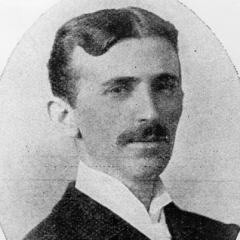
Nikola Tesla
Nikola Tesla

Nikola Tesla (July 10, 1856 - January 7, 1943) was a renowned inventor and engineer from Croatia, who later moved to the United States. He is best known for his significant contributions to the fields of electrical transmission and wireless communication. more

You May Also Like

“The only method compatible with our notions of civilization and the race is to prevent the breeding of the unfit by sterilization and the deliberate guidance of the mating instinct. [...] The trend of opinion among eugenists is that we must make marriage more difficult. Certainly no one who is not a desirable parent should be permitted to produce progeny.”

“My aim is to advocate that we make this mental switch in respect of our attitudes and practices towards a very large group of beings: members of species other than our own - or, as we popularly though misleadingly call them, animals. In other words, I am urging that we extend to other species the basic principle of equality that most of us recognize should be extended to all members of our own species.”

“In spite of all similarities, every living situation has, like a newborn child, a new face, that has never been before and will never come again. It demands of you a reaction that cannot be prepared beforehand. It demands nothing of what is past. It demands presence, responsibility; it demands you.”

“But when a man draws a lifeless thing into his passionate longing for dialogue, lending it independence and as it were a soul, then there may dawn in him the presentiment of a world-wide dialogue with the world-happening that steps up to him even in his environment, which consists partially of things. Or do you seriously think that the giving and taking of signs halts on the threshold of that business where an honest and open spirit is found?”