Quotessence
Home / Quotes / Quote by Blaise Pascal

Quote by Blaise Pascal

“The heart has its reasons of which reason knows nothing. We feel it in a thousand things. I say that the heart naturally loves the Universal Being, and naturally loves itself; and it gives itself to one or the other, and hardens itself against one or the other, as it chooses...it is the heart that feels God, not the reason; this is faith.”

Quote by Blaise Pascal

Author
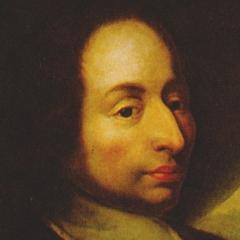
Blaise Pascal
Blaise Pascal

Blaise Pascal was a French mathematician, physicist, philosopher, and theologian. He was born on June 19, 1623, and died on August 19, 1662. Pascal's contributions to mathematics were particularly significant, with groundbreaking work in probability theory, analytical geometry, and early calculus. more

You May Also Like

“I'd have a stable full of Arabian steeds, rooms piled with books, and I'd write out of a magic inkstand, so that my works should be as famous as Laurie's music. I want to do something splendid before I go into my castle,-something heroic, or wonderful,-that won't be forgotten after I'm dead. I don't know what, but I'm on the watch for it, and mean to astonish you all, some day. I think I shall write books, and get rich and famous; that would suit me, so that is my favorite dream.”

“In the Christian sense, love is not primarily an emotion but an act of the will. When Jesus tells us to love our neighbors, he is not telling us to love them in the sense of responding to them with a cozy emotional feeling. You can as well produce a cozy emotional feeling as you can a cough or sneeze. On the contrary, he is telling us to love our neighbors in the sense of being willing to work for their well-being even if it means sacrificing our well-being to that end.”

“At least to look back over their own lives, as I have looked back over mine, for certain themes and patterns and signals that are so easy to miss when you're caught up in the process of living them. If God speaks to us at all other than through such official channels as the Bible and the church, then I think he speaks to us largely through what happens to us, so listen to what has happened to you-for the sound, above all else, of his voice.”

“I could, of course, have done no more if no less than affiliated myself in one way or another with a particular church, could have simply read books about Christianity, talked to Christian people, set out to discover something about what a Christian life is supposed to involve and then tried as best I could to live one. But, on the one hand, that didn't seem enough to me, and on the other, it seemed to much.”