Quotessence
Home / Authors / Frederick Buechner
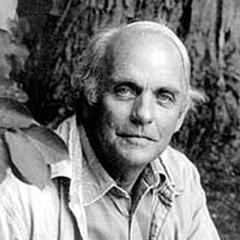
Frederick Buechner

Frederick Buechner Quotes

Writer

Filter quotes by topic

Famous Frederick Buechner Quotes

“What deadens us most to God’s presence within us, I think, is the inner dialogue that we are continuously engaged in with ourselves, the endless chatter of human thought. I suspect that there is nothing more crucial to true spiritual comfort . . . than being able from time to time to stop that chatter including the chatter of spoken prayer.”

“If we are to believe he is really alive with all that that implies, then we have to believe without proof. And of course that is the only way it could be. If it could be somehow proved, then we would have no choice but to believe. We would lose our freedom not to believe. And in the very moment that we lost that freedom, we would cease to be human beings. Our love of God would have been forced upon us, and love that is forced is of course not love at all. Love must be freely given. Love must live in the freedom not to love; it must take risks. Love must be prepared to suffer even as Jesus on the Cross suffered, and part of that suffering is doubt.”

“During one of our sessions I had the feeling that the therapist was trying to lead me to some major insight that might help save the day for me. When I asked if that was the case, she acknowledged it, but when I asked if she would be willing simply to tell me in some many words what the insight was, she demurred. That was not the sway psychotherapy worked, she said. It was something I would have to come to on my own if it was to have any real value for me, she said, or something like that. But then as the end of the hour drew near, she relented and put into words what it was she had been trying to lead me to see. There was nothing in the world just then that I was more fascinated to hear - for all I knew my recovery itself might depend on it - but even later that same day I couldn't have told you what she said nor could I possibly tell you now. I was simply not ready to hear it yet. The words I could hear all right, but in terms of their meaning I was as deaf as my mother before me, and possibly, like her, because I chose to be deaf. Possibly I was not ready to be well yet either.”

“I, with my eyes wide open, closed my eyes for years to the secret that I was looking to my children to give me more than either they had it in their power to give or could have given without somehow crippling themselves in the process. I thought that what I was afraid of more than anything else was that something awful would happen to them, but the secret I began to glimpse was that I was really less afraid for the children than I was afraid for myself. What awful thing would happen to me if something happened to them - that was what I was afraid of.”

“War is hell, but sometimes in the midst of that hell men do things that heaven itself must be proud of. A hand grenade is hurled into a group of men. One of the men throws himself on top of it, making his body a living shield. In the burst of wild fire he dies, and the others live. Heroism is only a word, often a phony one. This is an action for which there is no good word because we can hardly even imagine it, let alone give it its proper name. Very literally, one man takes death into his bowels, takes fire into his own sweet flesh, so that the other men can take life, some of them men he hardly knows.”

“Remember that the lives of other people are not your business. They are their business. They are God's business because they all have God whether they use the word God or not. Even your own life is not your business. It also is God's business. Leave it to God.”

“God is the comic shepherd who gets more of a kick out of that one lost sheep once he finds it again than out of the ninety and nine who had the good sense not to get lost in the first place. God is the eccentric host who, when the country-club crowd all turned out to have other things more important to do than come live it up with him, goes out into the skid rows and soup kitchens and charity wards and brings home a freak show. The man with no legs who sells shoelaces at the corner. The old woman in the moth-eaten fur coat who makes her daily rounds of the garbage cans. The old wino with his pint in a brown paper bag. The pusher, the whore, the village idiot who stands at the blinker light waving his hand as the cars go by. They are seated at the damask-laid table in the great hall. The candles are all lit and the champagne glasses filled. At a sign from the host, the musicians in their gallery strike up "Amazing Grace.”

“Let the preacher tell the truth. Let him make audible the silence of the news of the world with the sound turned off so that in the silence we can hear the tragic truth of the Gospel, which is that the world where God is absent is a dark and echoing emptiness; and the comic truth of the Gospel, which is that it is into the depths of his absence that God makes himself present in such unlikely ways and to such unlikely people that old Sarah and Abraham and maybe when the time comes even Pilate and Job and Lear and Henry Ward Beecher and you and I laugh till the tears run down our cheeks. And finally let him preach this overwhelming of tragedy by comedy, of darkness by light, of the ordinary by the extraordinary, as the tale that is too good not to be true because to dismiss it as untrue is to dismiss along with it that catch of the breath, that beat and lifting of the heart near to or even accompanied by tears, which I believe is the deepest intuition of truth that we have.”

“Somos todos mais místicos do que acreditamos ou queremos crer (...). Temos visto mais do que deixamos transparecer, até para nós mesmos. Seja em momentos de beleza ou dor, seja por meio de alguma reviravolta sutil em nossa vida, ao menos vislumbramos o que cegou os santos; só que, ao contrário dos santos, seguimos em frente como se nada tivesse acontecido. Seguir em frente ciente de que algo aconteceu, apesar de não ter certeza do que foi, nem do que fazer com o que ocorreu, é entrar na dimensão da vida de que trata a palavra religião.”

“Every person has one particular time in his life when he is more beautiful than he is ever going to be again. For some it is at seven, for others at seventeen or seventy, and as Laura Fleischman read out loud from Shakespeare, I remember thinking that for her it was probably just then.”

“I remember, for instance, the first time I went to the great palace of Versailles outside Paris and how, as I wandered around among all those gardens and fountains and statues, I had a sense that the place was alive with ghosts which I was just barely able to see, that somewhere just beneath the surface of all that was going on around me at that moment, the past was going on around me too with such reality and such poignance that I had to have somebody else to tell about it if only to reassure myself that I wasn’t losing my mind. I wanted and sorely needed to name to another human being the sights that I was seeing and the thoughts and feelings they were giving rise to. I thought that in a way I could not even surely know what I was seeing physically until I could speak of it to someone else, could not come to terms with what I was feeling as either real or unreal until I could put it into words and speak those words and hear other words in response to mine. But there was nobody to speak to, as it happened, and I can still remember the frustration of it: the sense I had of something trying to be born in me that could not be born without the midwifery of expressing it; the sense, it might not be too much to say, of my self trying to be born, of a threshold I had to cross in order to move on into the next room of who I had it in me just then to become. “in the beginning was the Word,” John writes, and perhaps part of what that means is that until there is a word, there can be no beginning. Frederick Buechner, A Room Called Remember, in an essay called The Speaking and Writing of Words.”

“Matthew lists Rahab as one of the ancestresses of the Lord Jesus Christ (Matthew 1:5), and that may be one reason why there was something about free-wheeling ladies with warm and generous hearts that he was never quite able to resist.”

“Everybody prays whether [you think] of it as praying or not. The odd silence you fall into when something very beautiful is happening or something very good or very bad. The ah-h-h-h! that sometimes floats up out of you as out of a Fourth of July crowd when the sky-rocket bursts over the water. The stammer of pain at somebody else s pain. The stammer of joy at somebody else's joy. Whatever words or sounds you use for sighing with over your own life. These are all prayers in their way.”

“In the silence of a midwinter dusk, there is a sound so faint that for all you can tell it may be only the sound of the silence itself. You hold your breath to listen. You are aware of the beating of your heart. The extraordinary thing that is about to happen is matched only by the extraordinary moment just before it happens. Advent is the name of that moment.”

“To forgive somebody is to say one way or another, "You have done something unspeakable, and by all rights I should call it quits between us. Both my pride and my principles demand no less. However, although I make no guarantees that I will be able to forget what you've done, and though we may both carry the scars for life, I refuse to let it stand between us. I still want you for my friend.”

“It is impossible to conceive how different things would have turned out if that birth had not happened whenever, wherever, however it did for millions of people who have lived since, the birth of Jesus made possible not just a new way of understanding life but a new way of living it. It is a truth that, for twenty centuries, there have been untold numbers of men and women who, in untold numbers of ways, have been so grasped by the child who was born, so caught up in the message he taught and the life he lived, that they have found themselves profoundly changed by their relationship with him.”

“It is the first day because it has never been before and the last day because it will never be again. Be alive, if you can, all through this day - today - of your life. What's to be done? What's to be done? Follow your feet. Put on the coffee. Start the orange juice, the bacon, the toast. Then go wake up your children and your spouse. Think about the work of your hands. Live in the needs of the day.”

“God knows we have our own demons to be cast out, our own uncleanness to be cleansed. Neurotic anxiety happens to be my own particular demon, a floating sense of doom that has ruined many of what could have been, should have been, the happiest days of my life, and more than a few times in my life I have been raised from such ruins, which is another way of saying that more than a few times in my life I have been raised from death - death of the spirit anyway, death of the heart - by the healing power that Jesus calls us both to heal with and to be healed by.”

“And there are other dangers potentially more dangerous than even nuclear war. There is AIDS. There is terrorism. There are drugs and more to the point the darkness of our time that makes people seek escape in drugs. There is the slow poisoning of what we call "the environment" of all things as if with that absurdly antiseptic phrase we can conceal from ourselves that what we are really poisoning is home, is here, is us.”

“I loved rain for making home seem home more deeply, and I suspect that is why, from as far back as I can remember, I also loved those books I read and the people I met in them and the worlds they opened up to me. Like a house in the rain, books were havens of permanence and protection from whatever it was that as a child I needed protection from.”