Quotessence
Home / Quotes / Quote by Milan Kundera

Quote by Milan Kundera

“All novels . . . are concerned with the enigma of the self. As soon as you create an imaginary being, a character, you are automatically confronted by the question: what is the self? How can it be grasped?”

Quote by Milan Kundera

Author
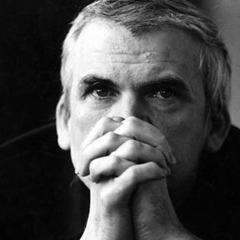
Milan Kundera
Milan Kundera

Milan Kundera is a renowned Czech-French writer known for his profound psychological insights and unique narrative techniques. His works often explore themes of personal freedom, love, morality, and existentialism, with notable titles including 'The Unbearable Lightness of Being' and 'The Joke'. more

You May Also Like

“The best literature is always a take [in the musical sense]; there is an implicit risk in its execution, a margin of danger that is the pleasure of the flight, of the love, carrying with it a tangible loss but also a total engagement that, on another level, lends the theater its unparalleled imperfection faced with the perfection of film. I don’t want to write anything but takes.”

“Skill alone cannot teach or produce a great short story, which condenses the obsession of the creature; it is a hallucinatory presence manifest from the first sentence to fascinate the reader, to make him lose contact with the dull reality that surrounds him, submerging him in another that is more intense and compelling.”

“We know that attention acts as a lightning rod. Merely by concentrating on something one causes endless analogies to collect around it, even penetrate the boundaries of the subject itself: an experience that we call coincidence, serendipity – the terminology is extensive. My experience has been that in these circular travels what is really significant surrounds a central absence, an absence that, paradoxically, is the text being written or to be written.”

“Grief is a most peculiar thing; we’re so helpless in the face of it. It’s like a window that will simply open of its own accord. The room grows cold, and we can do nothing but shiver. But it opens a little less each time, and a little less; and one day we wonder what has become of it.”